
Contents
Quick Answer: “The Shroud” (Kafan) by Munshi Premchand tells the story of Ghisu and Madhav, a poor father-son duo who let Budhiya (Madhav’s wife) die in childbirth, beg villagers for shroud money, then spend it all on alcohol and food instead of a burial cloth. The story is a bleak critique of caste, poverty, and the hollowness of ritual over human life.
In this post, notes of “Unit 1: the shroud by premchand summary” from “DSC-12: Indian Writing in English Translation” are given, helpful for B.A. (Hons) English students.
Biography of Premchand
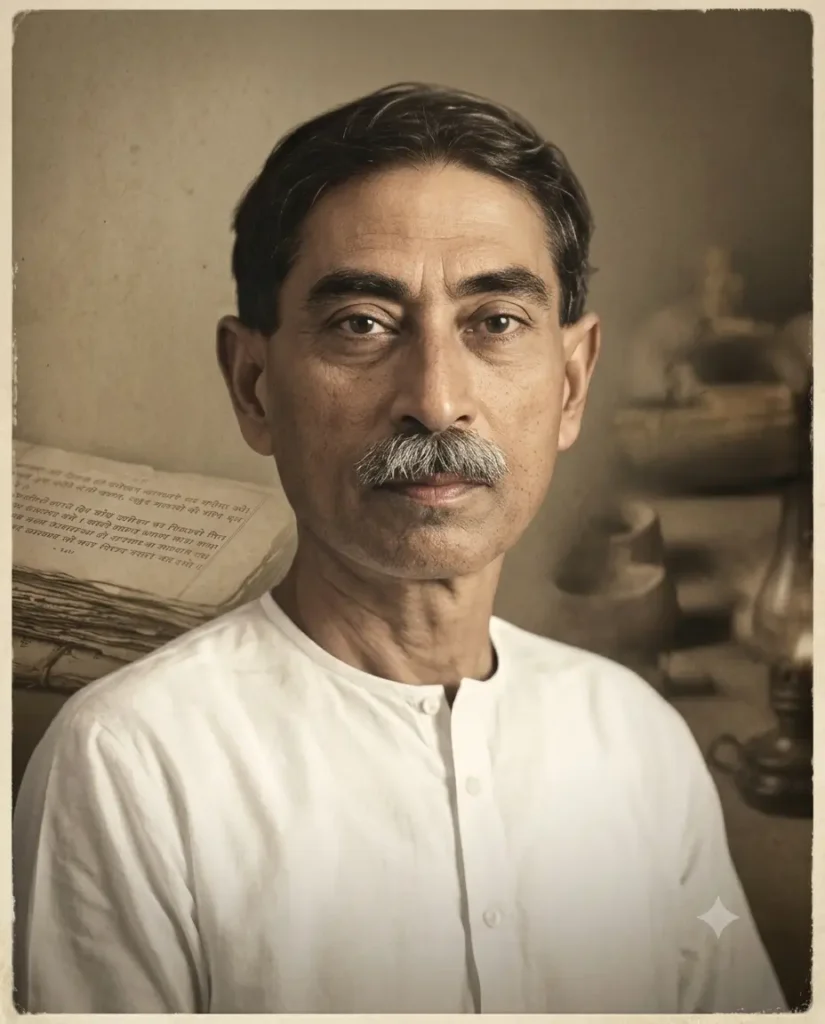
Munshi Premchand (1880–1936) was born Dhanpat Rai in Lamhi, a village near Varanasi. He is regarded as one of the greatest writers in Indian literature, often called the “Emperor of Novels” (Upanyas Samrat). His stories focused on social problems, class struggles, the hardships of the poor, and the realities of life under British rule in India.
He is well-known for short stories like “The Shroud” (Kafan), “The Idlers of the Storm” (Gharwapsi), and novels like Sevasadan and Godaan.
Overview of Urdu Literature
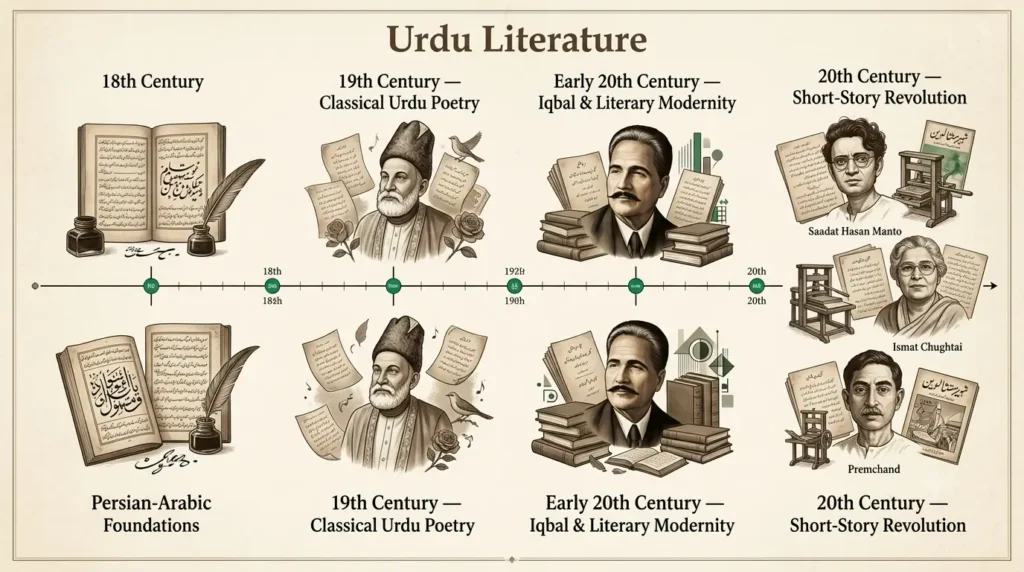
Urdu literature began in the early 18th century, growing from a mix of Persian, Arabic, and local Indian languages. Early poets like Mirza Ghalib and Allama Iqbal are key figures. The short story genre became popular in the late 19th and early 20th centuries with writers like Saadat Hasan Manto, Ismat Chughtai, and Premchand.
Context and Background of “The Shroud”
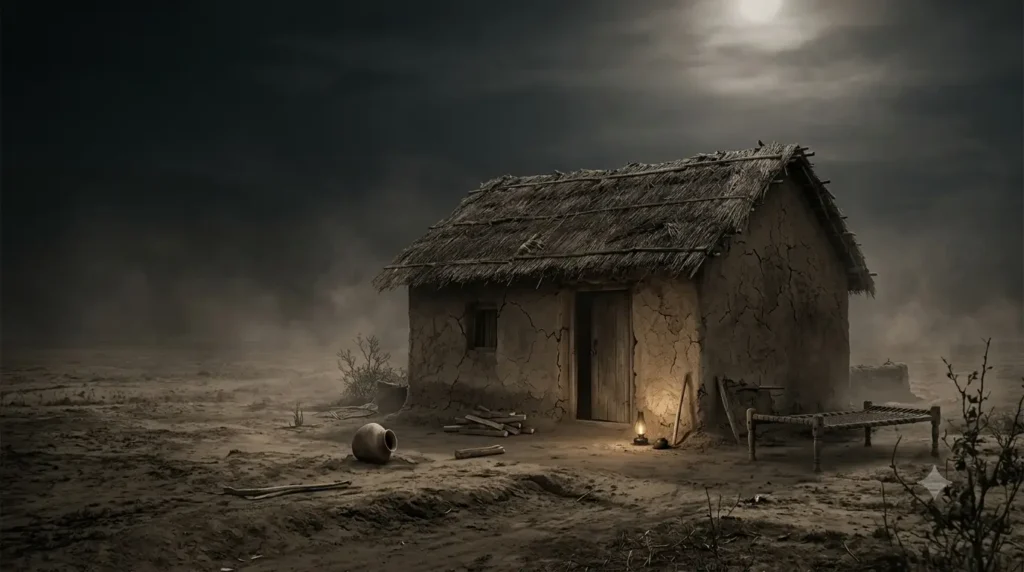
First published in 1936, “The Shroud” or “Kafan” is widely considered Premchand’s bleakest and most powerful short story — a study of what happens to human dignity when poverty is total. For a full scholarly reading of its symbolism, see this academic analysis on MuseIndia.
Word Meanings / Glossary
| Word/Term | Meaning |
|---|---|
| Kafan | Shroud — the cloth used to wrap a dead body before Hindu cremation |
| Thakur | A village landlord/upper-caste feudal figure |
| Untouchable caste | The lowest, most socially excluded caste group in traditional Hindu hierarchy (Dalit) |
| Cremation | Hindu funeral rite of burning the body |
| Existentialism | A philosophy focused on individual meaning/absurdity in an indifferent world |
Detailed Summary of “The Shroud”
The story is set in an impoverished Indian village and centers on a father and son, Ghisu and Madhav, who belong to the lowest ‘untouchable’ caste. They are known for their extreme laziness, working only when starvation is imminent.
The plot is triggered by a crisis. Madhav’s young wife, Budhiya, is in labor. Instead of helping her, Ghisu and Madhav sit outside, focused only on their own hunger. Eventually, Budhiya’s screams cease — she and the newborn die.

As per custom, a body must be wrapped in a new shroud (kafan) before cremation. Ghisu and Madhav have no money, so they beg from the village landlords and officials, eventually collecting about five rupees.
With the money in hand, their path takes them past a liquor shop. They convince themselves to have “just a little drink” — one drink leads to another, and they spend the donated money on alcohol and fried snacks.
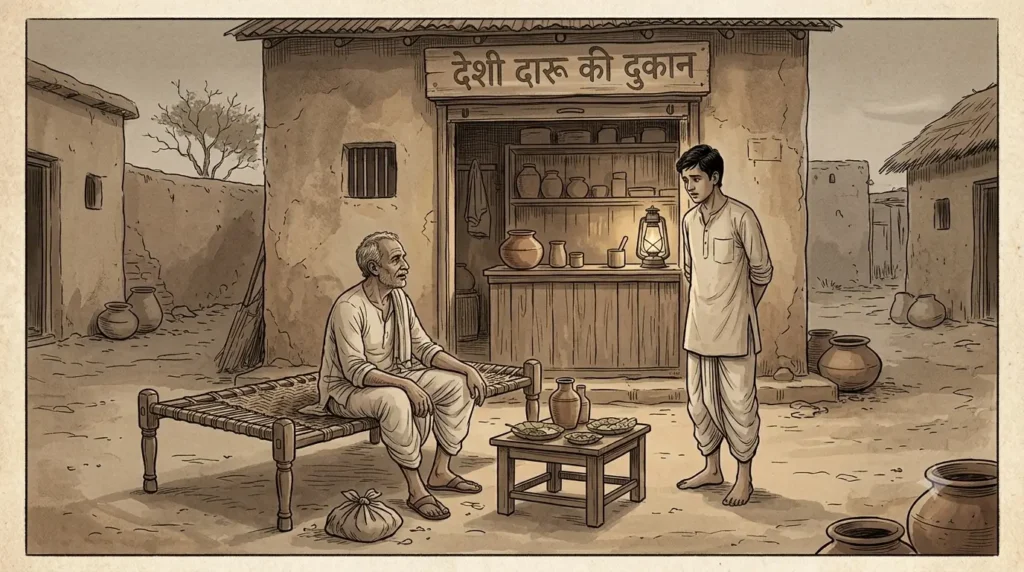
As the alcohol takes effect, their guilt vanishes. In their drunken state, Ghisu philosophizes that the shroud is a pointless ritual — Budhiya never had a good sari in life, so why would she need an expensive shroud in death? He concludes their present enjoyment is a more fitting tribute.
The story ends ironically: the men, now drunk and full, remember the shroud too late — the money is gone, and dawn’s cremation looms with no solution.
Character Sketch: Ghisu vs Madhav
| Trait | Ghisu (Father) | Madhav (Son) |
|---|---|---|
| Age/Role | Older, more cynical and experienced in avoiding work | Younger, newly a husband and (briefly) a father |
| Attitude to Budhiya’s death | Detached, rationalizes it philosophically | Slightly more conflicted, occasionally guilty |
| Symbolic function | Represents a generation fully broken by systemic poverty | Represents how the next generation inherits the same defeatism |
| Key moment | Justifies spending the shroud money on alcohol | Goes along with his father despite hesitation |
Analysis: Layers of Meaning in the Bleakness
1. A Scathing Critique of Systemic Oppression: Premchand portrays Ghisu and Madhav not as villains but as products of their environment — a lifetime of exploitation with no reward has bred total apathy.
2. The Dehumanizing Effect of Poverty: Their reaction to Budhiya’s death is one of inconvenience, not tragedy — extreme deprivation has eroded even grief.
3. The Hypocrisy of Ritual vs. the Value of Life: The village that did nothing to save Budhiya’s life readily donates for her shroud — valuing the performance of death over the preservation of life.
4. Ironic Existentialism: Ghisu’s drunken justification — that momentary pleasure is a more “real” tribute than a burning cloth — is a bleak rebellion against a meaningless existence.
“What difference does it make if the shroud is cheap or costly, once it’s set alight? She never had a new sari to wear in her lifetime — would she have cared about a shroud?” — paraphrased sentiment of Ghisu’s central justification, the story’s most quoted moment.
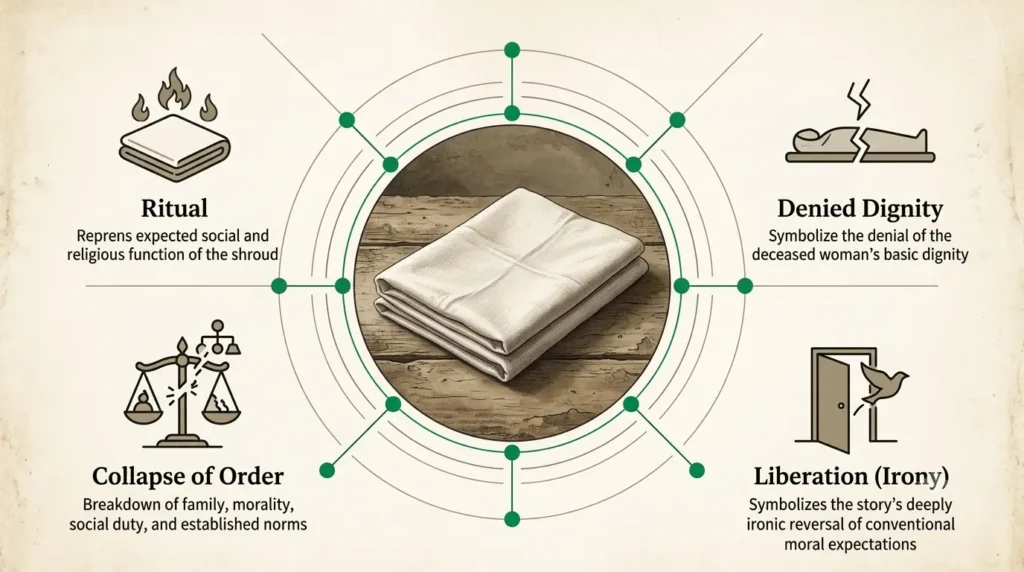
5. Symbolism of the Shroud: The shroud is a multifaceted symbol — of ritual, of denied dignity, of ironic liberation for Ghisu and Madhav, and, in its absence, of the collapse of moral order.
Key Takeaways
“The Shroud” offers no redemption or easy moral. It is a raw, unflinching look at how caste and poverty can strip away even the capacity to grieve — a story that continues to resonate because the questions it raises remain unresolved.
Previous Year Questions (DSC-12)
Previous Year Questions — The Shroud (Kafan)
Important questions from previous year exam patterns on this topic. Tap a question to view a quick-answer guide.
1 Discuss “The Shroud” as a critique of the caste system and poverty in colonial India. +
2 What role does irony play in the climax of “The Shroud”? +
3 Comment on the significance of the title “Kafan” (The Shroud). +
4 Write a character sketch of Ghisu. +
5 How does Premchand portray the hypocrisy of village society in “The Shroud”? +
6 Explain the theme of dehumanization in “The Shroud.” +
FAQs
What does the shroud symbolize in the book Kafan?
In Premchand’s “Kafan,” the shroud symbolizes the hollowness of ritual, societal neglect, and the dehumanizing effects of extreme poverty. It highlights the hypocrisy of a community that pays for a funeral cloth but ignores a person’s suffering in life.
What is the theme of Shroud?
The central theme is how extreme poverty and social oppression dehumanize people, crushing their empathy and reducing them to a mere struggle for survival.
What is the summary of the story Kafan by Premchand?
A poor father and son, Ghisu and Madhav, are too lazy to help Madhav’s wife Budhiya during her difficult labor. She dies. They beg the village for shroud money but spend it all on alcohol and food instead, revealing how poverty can strip away basic humanity.
Who are the main characters in “The Shroud”?
The main characters are Ghisu (the father), Madhav (the son), and Budhiya (Madhav’s wife, whose death sets the plot in motion).
When was “The Shroud” (Kafan) published?
It was published in 1936, shortly before Premchand’s death, and is considered one of his darkest and most powerful works.
Subscribe to keep reading
You've used your free notes for now. Get Delhi Pathshala Premium for unlimited access.
Subscribe — ₹29/30 days
There is a confusion in the summary, specifically in regard to the characters. Budhiya is the wife of Madhav, the one struggling in labour pain and who unfortunately dies due to neglect. Ghisu’s wife (mother of Madhav) dosnt have any place in the story. It’s a very short plot with few characters, why so much error?
Thanks for pointing that out! My apologies for the error. Budhiya is indeed Madhav’s wife, and Ghisu’s wife isn’t in the story. I’ve updated the summary to be accurate.