
Contents
- Overview: Background of Israel’s Political System
- Main Features of Israel’s Parliamentary Democracy
- The Importance of the Declaration of Independence
- The Constitution of Israel
- No Formal Written Constitution
- Basic Laws in Governance
- Key Principles
- Debates on a Formal Constitution
- The Executive
- The President
- The Prime Minister
- The Cabinet
- The Legislature
- The Knesset
- Powers of the Knesset
- The Lawmaking Process
- Committees in the Knesset
- The Judiciary in Israel
- Structure and Levels of Courts
- The Supreme Court and Basic Laws
- Judicial Review and Its Effects
- Appointing Judges
- Controversy Over Judicial Appointments
- Political Parties and Elections in Israel
- Main Political Parties
- Electoral System: Proportional Representation
- Coalition Politics
- Recent Trends
- Federalism and Local Governance in Israel
- Current Issues in Israel
- Religion’s Role in Politics
- Jewish vs. Democratic Values
- Security Challenges
- Israel’s Foreign Relations
- Comparative Snapshot: Israel vs UK vs USA
- Previous Year & Expected Exam Questions (DSC 17, Unit 7)
- FAQs on Israel’s Political System
In this post, you’ll find complete, exam-ready notes on “Unit 7: Introduction to Israel’s Political System” from DSC 17: Comparative Political Systems, covering the Knesset, the executive, the judiciary, elections, local governance, and current political issues — everything you need for your DU semester exam.
Overview: Background of Israel’s Political System
Israel’s political system blends old Jewish governance traditions with modern democratic ideas. The country was formed in 1948, shaped by Zionist beliefs, British colonial rule, and Jewish community self-governance structures built before independence.
- Before 1948: During the British Mandate (1920–1948), Jewish bodies like the Jewish Agency and Va’ad Leumi (National Council) practiced self-governance, laying the foundation for Israel’s democratic system.
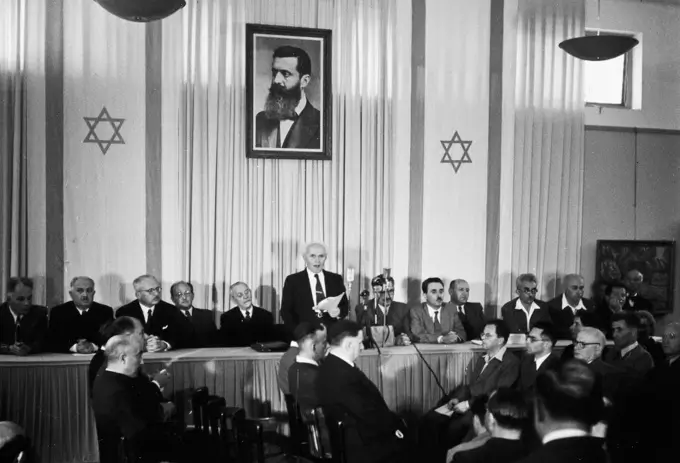
- 1948 Independence: Israel declared independence on 14 May 1948. The Declaration established a democratic system promising equality and rights for all citizens.
- Building Political Institutions: Over time, Israel developed a multi-party system, a parliamentary structure, and an independent judiciary supporting democratic values.
Main Features of Israel’s Parliamentary Democracy
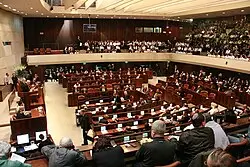
- The Knesset — 120 members elected via proportional representation every four years (though early elections are common); it both makes laws and approves the government.
- The Executive Branch — Led by the Prime Minister (usually the head of the ruling coalition); the President holds a mostly ceremonial role.
- The Judiciary — An independent court system with the Supreme Court as the highest legal authority.
- Multi-Party System — Many parties representing different beliefs, religions, and ethnic groups; coalition governments are the norm.
- Religion’s Role — Israel is officially a Jewish state but allows freedom of religion; religious parties strongly influence marriage, conversion, and Sabbath laws.
The Importance of the Declaration of Independence
- Democratic Values: Promises equality regardless of religion, race, or gender.
- Legal Influence: Israel has no formal constitution, but the Declaration guides the Basic Laws, which function like constitutional rules.
- Balancing Jewish and Democratic Identity: The Declaration makes Israel both a Jewish state and a democracy — a tension that shapes ongoing political debate.
The Constitution of Israel
No Formal Written Constitution
Israel is unusual among democracies for not having a single, formal written constitution:
- The 1948 Debate: Disagreements between religious and secular groups over the role of Jewish law blocked agreement on a constitution.
- The Harari Decision (1950): The Knesset decided to build Basic Laws gradually instead of drafting a complete constitution at once.
- Ongoing Political and Religious Issues: The secular-vs-religious-state debate continues to delay a formal constitution.
Basic Laws in Governance
- Features: Passed like regular laws by the Knesset, but some (e.g., on human rights) are treated by the Supreme Court as having constitutional-level authority.
- Important Basic Laws:
- Basic Law: The Knesset — governs how Parliament functions.
- Basic Law: The Government — defines executive and PM powers.
- Basic Law: The Judiciary — establishes an independent court system.
- Basic Law: Human Dignity and Liberty (1992) — protects human rights.
- Basic Law: Nation-State (2018) — declares Israel the nation-state of the Jewish people; controversial for minority rights.
Key Principles
- Democracy — free elections, separation of powers, independent courts.
- Jewish Identity — role of Halakha (Jewish law); Law of Return (1950) grants citizenship to Jews worldwide.
- Rule of Law — even government leaders are subject to judicial review.
Debates on a Formal Constitution
Supporters argue it would give legal stability, protect civil rights, and separate religion from politics. Opponents worry it could weaken Israel’s Jewish character or that religious-secular splits make consensus impossible.
The Executive
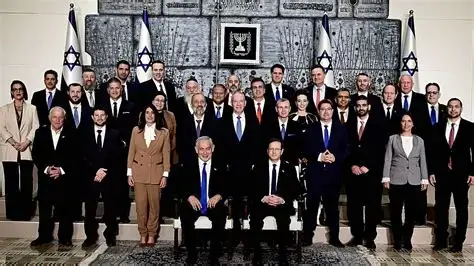
Israel’s executive comprises the President, Prime Minister, and Cabinet.
The President
Head of state, mainly a symbolic role. Chosen by the Knesset for a seven-year term.
Main Duties: Selecting the PM-designate after elections, granting pardons, ceremonial representation, and encouraging compromise during political crises.
The Prime Minister
Head of government with the most real power; usually leads the largest coalition party and is formally appointed by the President.
Powers: Forms and leads the government, sets national policy, chairs Cabinet meetings, represents Israel internationally. Limits: Depends on holding 61/120 Knesset seats; subject to Supreme Court and Knesset oversight; can be removed via no-confidence vote.
The Cabinet
Ministers head specific portfolios (Defense, Health, etc.); decisions need majority vote; a smaller Security Cabinet handles military/national security matters. Cabinet stability depends entirely on coalition cohesion.
The Legislature
The Knesset
Israel’s 120-member, one-house parliament, elected every four years (barring early elections).
Key Features: 3.25% electoral threshold to enter; no single party has ever won an outright majority, so coalitions are essential; the Knesset can hold no-confidence votes and dissolve itself.
Powers of the Knesset
Lawmaking, approving the government, budget control, oversight/investigations, and involvement in treaty and defense decisions.
The Lawmaking Process
Proposal → First Reading → Committee Review → Second & Third Readings → signed into law by the President, PM, and relevant ministers.
Committees in the Knesset
Permanent Committees (Foreign Affairs, Finance) review bills and question ministers; Special Committees address temporary issues like public health.
The Judiciary in Israel
Structure and Levels of Courts
- Magistrates’ Courts — lowest level, civil/criminal cases.
- District Courts — appeals from Magistrates’ Courts; located in Jerusalem, Tel Aviv, Haifa.
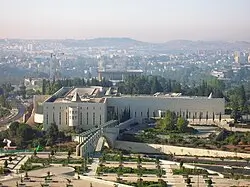
- The Supreme Court — in Jerusalem; acts as both the final Court of Appeals and the High Court of Justice (Bagatz), reviewing government actions against Basic Laws.
Israel also has religious courts, military courts, and labor courts.
The Supreme Court and Basic Laws
Since there’s no formal constitution, the Supreme Court’s interpretation of Basic Laws effectively functions as constitutional review. In the landmark 1995 “Mizrahi Bank” case, the Court asserted its power to strike down laws conflicting with Basic Laws — a major constitutional shift.
Judicial Review and Its Effects
Prevents abuse of power, but is politically controversial — critics argue the Court has too much influence over elected officials. The Court has ruled on the Nation-State Law (2021), LGBTQ+ rights, and security-vs-civil-liberties cases.
Appointing Judges
A 9-member Judicial Selection Committee (2 Supreme Court justices, 2 ministers, 2 Knesset members, 2 Bar Association reps, 1 public representative) selects judges; Supreme Court appointments need 7/9 votes.
Controversy Over Judicial Appointments
The 2023–2024 judicial reform proposals aimed to give government more control over appointments, triggering mass protests and deep political division.
Political Parties and Elections in Israel
Main Political Parties
| Bloc | Key Parties | Core Ideology |
|---|---|---|
| Right-wing & Religious | Likud, Religious Zionist Party, Shas, United Torah Judaism | Free market, security, Jewish nationalism, religious law influence |
| Center & Left-wing | Yesh Atid, National Unity, Labor, Meretz | Secularism, civil rights, social justice, two-state solution |
| Arab & Minority | Hadash-Ta’al, Ra’am | Palestinian/Arab citizen rights, social equality |
Electoral System: Proportional Representation
120 seats allocated by vote share; 3.25% threshold (~4 seats) to enter the Knesset; closed-list system — voters choose a party, not a candidate.
Effects: Political fragmentation, near-permanent coalition governments, and frequent early elections (five elections between 2019–2022).
Coalition Politics
Formation involves: President consults party leaders → leading party negotiates for 61+ seats → Knesset votes confidence. Challenges include instability, policy compromises, and religious-secular conflict over issues like military exemptions and civil marriage.
Recent Trends
Rising polarization, growth of far-right/religious parties post-2022, Ra’am’s historic 2021 entry into a coalition as the first Arab party, and the 2023–2024 judicial reform controversy.
Federalism and Local Governance in Israel
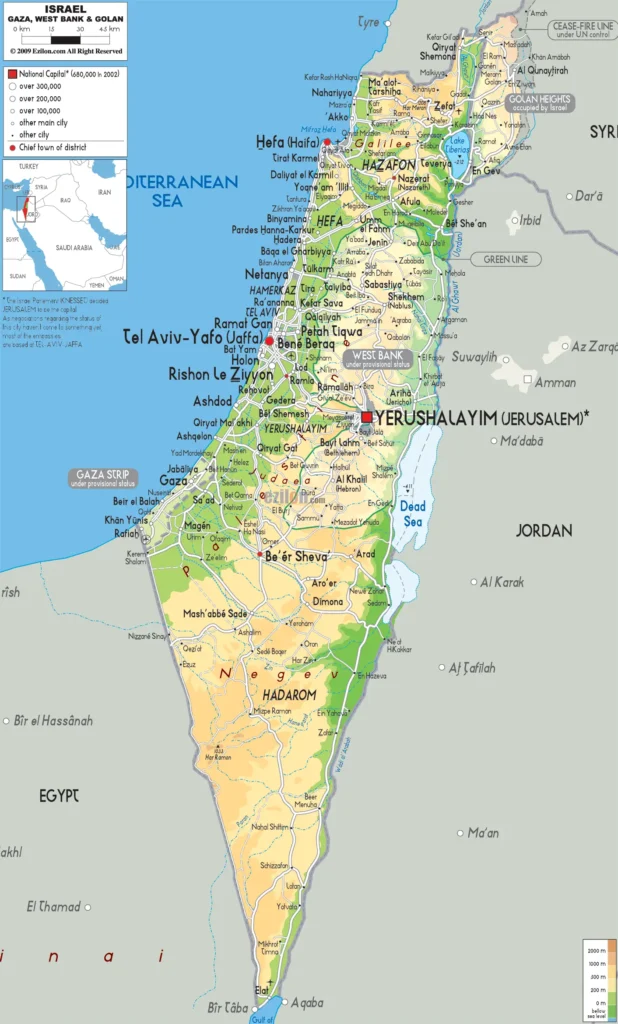
Israel is a unitary state — power is centralized nationally, unlike federal systems (US, Germany).
Three types of local authorities:
- Municipalities (Jerusalem, Tel Aviv, Haifa) — urban planning, education, sanitation.
- Local Councils — smaller towns; roads, local business, education services.
- Regional Councils — rural areas like kibbutzim/moshavim; agriculture, environment.
Challenges: Economic disparities between wealthy cities and poorer Arab/Haredi towns, corruption cases (e.g., former Jerusalem Mayor Ehud Olmert), and ethnic tensions in mixed cities like Lod and Haifa.
Current Issues in Israel
Religion’s Role in Politics
Religious parties push for military exemptions, religious school funding, and Sabbath restrictions; there is no civil marriage in Israel, so many couples marry abroad.
Jewish vs. Democratic Values
The Nation-State Law (2018) prioritizes Jewish identity (Hebrew as sole official language) over full equality — a major point of tension with Arab citizens (~20% of the population) and secular Israelis.
Security Challenges
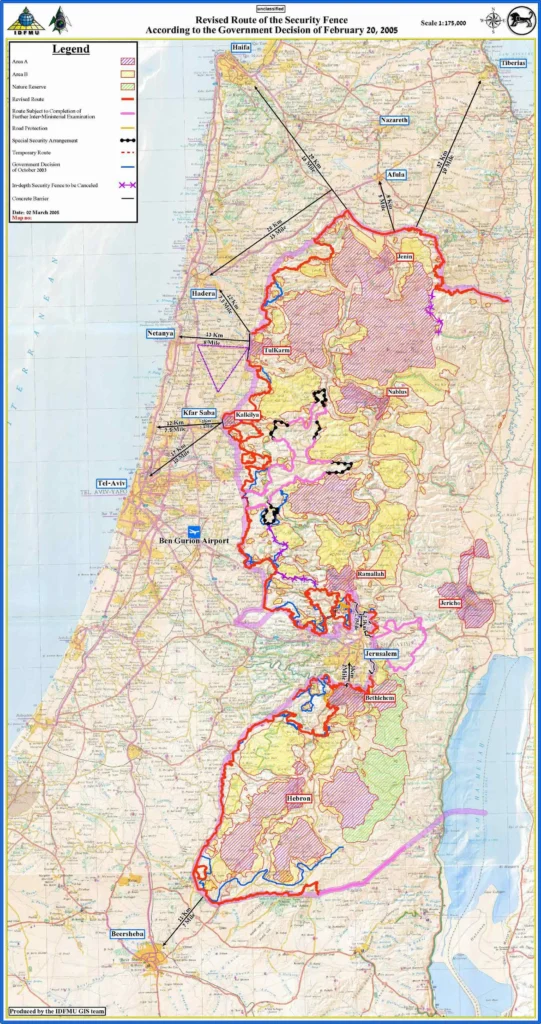
Ongoing Israeli-Palestinian conflict, Hamas-Israel tensions in Gaza, the West Bank security barrier, and Iran as the top strategic threat due to its nuclear program and support for Hezbollah.
Israel’s Foreign Relations
The Abraham Accords (2020) normalized ties with the UAE, Bahrain, Morocco, and Sudan. The US remains Israel’s closest ally; the EU criticizes settlement expansion while maintaining trade ties; the BDS movement continues to pressure Israel internationally.
Comparative Snapshot: Israel vs UK vs USA
| Feature | Israel | United Kingdom | United States |
|---|---|---|---|
| System | Parliamentary | Parliamentary (Constitutional Monarchy) | Presidential |
| Head of State | President (ceremonial) | Monarch | President (executive) |
| Legislature | Unicameral (Knesset) | Bicameral (Commons + Lords) | Bicameral (Congress) |
| Electoral System | Proportional Representation | First-Past-the-Post | Electoral College |
| Written Constitution | No (Basic Laws) | No | Yes |
| Government Formation | Coalition-dependent | Usually single-party majority | Fixed presidential term |
For a deeper look at other DSC 17 units, check our notes on the Political System of South Africa and the Political System of Russia.
Previous Year & Expected Exam Questions (DSC 17, Unit 7)
Note: DU does not always publish subject-and-unit-wise official archives publicly, so these are the most likely and recurring question patterns based on the DSC 17 syllabus structure and past DU comparative-politics paper trends — good for both long-answer and short-note practice.
- Discuss the salient features of Israel’s parliamentary democracy. Why does Israel not have a formal written constitution?
- Explain the role and powers of the Knesset in Israel’s political system.
- Examine the relationship between the Prime Minister and the Cabinet in Israel’s executive branch.
- “The Israeli judiciary plays a quasi-constitutional role.” Discuss with reference to the Basic Laws.
- Analyse the impact of proportional representation on coalition politics and government stability in Israel.
- Write short notes on: (a) Basic Law: Nation-State (2018) (b) The Harari Decision (c) The Mizrahi Bank Case
- Discuss the tension between Israel’s Jewish identity and its democratic values.
- Evaluate the challenges facing local governance in Israel.
Looking for more? Browse our complete DU BA Political Science PYQ archive.
FAQs on Israel’s Political System
Does Israel have a written constitution?
No. Israel has no single formal constitution. Instead, it relies on a series of Basic Laws passed by the Knesset, which function together as a constitutional framework.
How many members does the Knesset have?
The Knesset has 120 members (MKs), elected through proportional representation, typically every four years.
Who holds more power — the President or the Prime Minister of Israel?
The Prime Minister holds real executive power and heads the government. The President is largely a ceremonial head of state.
What is the electoral threshold to enter the Knesset?
A party needs at least 3.25% of the total vote (roughly 4 seats) to enter the Knesset.
Why does Israel have frequent elections?
Because no party has ever won an outright majority, governments depend on fragile multi-party coalitions that often collapse, triggering early elections — Israel held five elections between 2019 and 2022 alone.
What is the significance of the Nation-State Law (2018)?
It declares Israel the nation-state of the Jewish people and Hebrew the sole official language, sparking debate over how it balances Jewish identity with democratic equality for minorities.
Is Israel a federal or unitary state?
Israel is a unitary state — power is centralized at the national level, and local governments have limited autonomy.
Further Reading (external, authoritative sources): Knesset – Official Website | Israeli System of Government – Wikipedia
Subscribe to keep reading
You've used your free notes for now. Get Delhi Pathshala Premium for unlimited access.
Subscribe — ₹29/30 days