
Contents
‘When My Play was with Thee’ is Poem XCVII from Rabindranath Tagore’s Gitanjali (1912). Prescribed under DSC-12: Indian Writing in English Translation (Unit 2B), the poem is a nostalgic meditation on the innocent, effortless bond a child shares with the divine — and what is lost as that child grows into self-aware adulthood.
Part of: DSC-12 Unit 2B — Gitanjali Complete Notes
Key Facts
| Aspect | Detail |
|---|---|
| Poem number | XCVII (97) |
| Form | Prose poem |
| Collection | Gitanjali (Song Offerings) |
| Central symbol | Play (childhood) |
| Tone | Nostalgic, tender, wistful |
| Addressee | The divine (“thee”) |
Summary
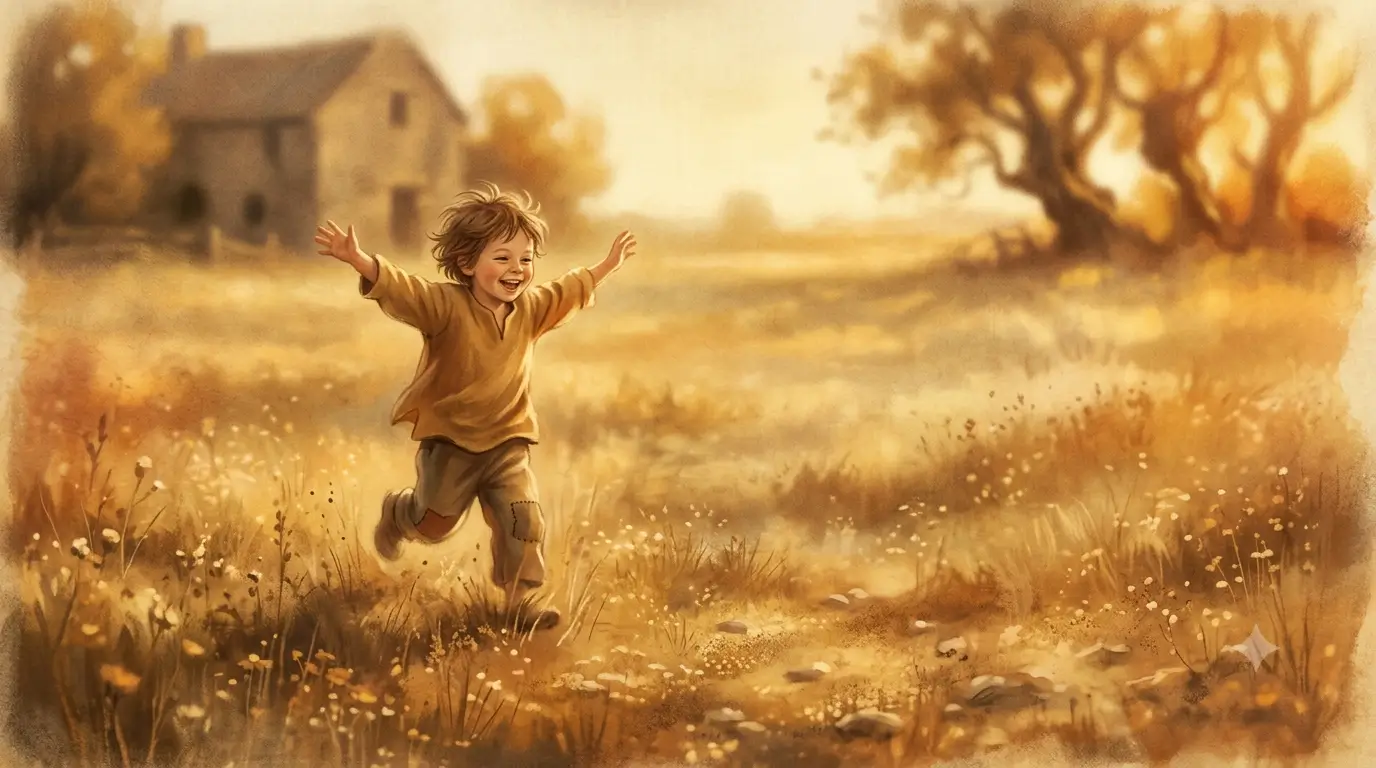
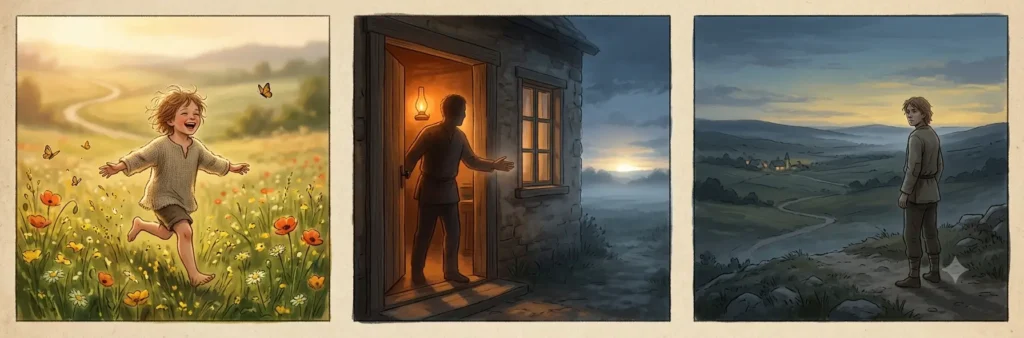
The poet looks back on childhood, when his relationship with the divine was pure play — spontaneous, joyful, and free of questions or fear. He didn’t know or need to know who “thee” was; he simply ran, laughed, and shared his days with a companion he trusted completely, waking each morning to the call of a friend rather than a distant god. There was no ritual, no formality, no self-consciousness in this bond — only boisterous, unguarded joy.
As the poem progresses, the poet registers a quiet loss: growing up brought awareness, questioning, and worldliness, and with them, distance from that original, effortless closeness. The poem doesn’t resolve this loss so much as hold it up for contemplation — innocence remembered, not recovered.
Line-by-Line Explanation
“I never questioned who thou wert” The poem opens by establishing that in childhood, the poet’s bond with the divine came before belief needed a name — he simply didn’t need to know who his playmate was. This sets up the poem’s central idea: in innocence, trust precedes intellect.
“I knew nor shyness nor fear, my life was boisterous” The poet defines his childhood through two negatives — no shyness, no fear. This wasn’t formal reverence or worship; it was a boisterous (energetic, unrestrained) closeness that reads more like friendship than ritual devotion.
“Thou wouldst call me from my sleep like my own comrade” This is the poem’s most striking image — the divine is imagined as a “comrade,” not a distant God. Even being woken up becomes an intimate, friendly gesture, a clear departure from conventional devotional poetry’s language of awe.
“Lead me running from glade to glade” The physical movement — running, roaming freely — becomes a metaphor for spiritual freedom. There’s no structure, no rule, only spontaneous joy shared with the divine.
“I never cared to know the meaning of songs thou sangest to me” The poet admits that back then, meaning simply didn’t matter — only the experience did. This deepens the poem’s definition of innocence: understanding wasn’t needed; feeling and participation were enough.
“Only my voice took up the tunes, and my heart danced in their cadence” The poet followed the songs without understanding them — his voice and heart synced naturally with the rhythm. This shows the spiritual connection was instinctive rather than intellectual — the way the body knows something before the mind explains it.
“Now, when the playtime is over, what is this sudden sight that is come upon me?” Here the poem’s tone shifts — from the joyful past tense of memory to a reflective present tense. “Playtime is over” signals that this phase of innocence has ended, and a new, heavier awareness is setting in.
“The world with eyes bent upon thy feet stands in awe with all its silent stars” The closing image is powerful: where the divine was once a casual comrade in childhood, the poet now sees the entire universe — down to the silent stars — standing in awe and reverence before it. This formal, distant worship is the direct opposite of the childhood closeness described earlier. This is the poem’s core loss: a journey from friendship to reverence, in which something intimate has quietly slipped away.
Themes
1. Innocence and Its Loss
The poem frames spiritual closeness as something naturally available in childhood, gradually eroded by the self-awareness and questioning that come with growing up.
2. The Divine as Companion, Not Deity
Unlike traditional devotional poetry that emphasizes awe and distance, Tagore imagines God as a playmate — reshaping the reader’s sense of what intimacy with the divine can look like.
3. Nostalgia as Spiritual Reflection
Looking back becomes a form of spiritual practice in itself — remembering innocence is presented as a way of understanding what has been gained and lost in maturity.
Symbols
| Symbol | Meaning |
|---|---|
| Play | Effortless, joyful communion with the divine |
| Childhood | A state of spiritual purity, free from ego and doubt |
| The “comrade” who calls at morning | The divine reimagined as an intimate companion |
| Growing older / worldliness | The gradual distancing of the soul from instinctive faith |
Literary Devices
- Nostalgic first-person retrospection — the entire poem is memory framed as present loss
- Metaphor — “play” as a stand-in for unmediated spiritual union
- Contrast — carefree childhood vs. self-aware, questioning adulthood
- Simple, conversational diction — mirrors the innocence being described
Critical Analysis
What makes this poem distinct within Gitanjali is its refusal of formal devotional language. Tagore doesn’t approach the divine through prayer or ritual here — he approaches through memory of play, suggesting that the truest spiritual connection may be the one that doesn’t yet know it is spiritual. This reframes the entire collection’s central longing: the goal isn’t to acquire new understanding of the divine, but to recover a lost, instinctive intimacy that existed before understanding was even a category.
Important Questions (PYQ-Style)
- How does Tagore use the metaphor of “play” to describe the soul’s relationship with the divine?
- Discuss the theme of innocence and its loss in ‘When My Play was with Thee.’
- “I knew not my name” — explain this line with reference to the poem’s central idea.
- How does the poem’s tone shift from the beginning to the end? What does this shift signify?
- Compare the poet’s relationship with the divine in childhood versus adulthood as depicted in the poem.
Frequently Asked Questions
What does “play” symbolize in this poem?
Play symbolizes the poet’s innocent, effortless, and joyful communion with the divine during childhood, before self-awareness and worldly concerns set in.
What is the poem number of ‘When My Play was with Thee’ in Gitanjali?
It is Poem XCVII (97) in the English edition of Gitanjali.
Is this poem about a human relationship or a divine one?
It is addressed to the divine (“thee”), though it’s expressed through the intimate, familiar language of childhood friendship rather than formal worship.
How does this poem relate to ‘Light, Oh Where is the Light?’
Both poems trace the soul’s relationship with the divine — this one through the innocence and loss of childhood closeness, the other through active searching amid darkness. Read the comparison →
Continue reading:
Subscribe to keep reading
You've used your free notes for now. Get Delhi Pathshala Premium for unlimited access.
Subscribe — ₹29/30 days