
Contents
This post covers Unit 2B: Gitanjali — prescribed under DSC-12: Indian Writing in English Translation, Semester 4, B.A. (Hons.) English, University of Delhi. Two poems from Tagore’s Nobel Prize-winning collection are in your syllabus:
- ‘Light, Oh Where is the Light?’ (Poem XXVII)
- ‘When My Play was with Thee’ (Poem XCVII)
Below is a quick overview of both poems along with links to their complete, exam-focused analysis — including line-by-line explanation, themes, symbols, and previous year questions (PYQs).
About Rabindranath Tagore
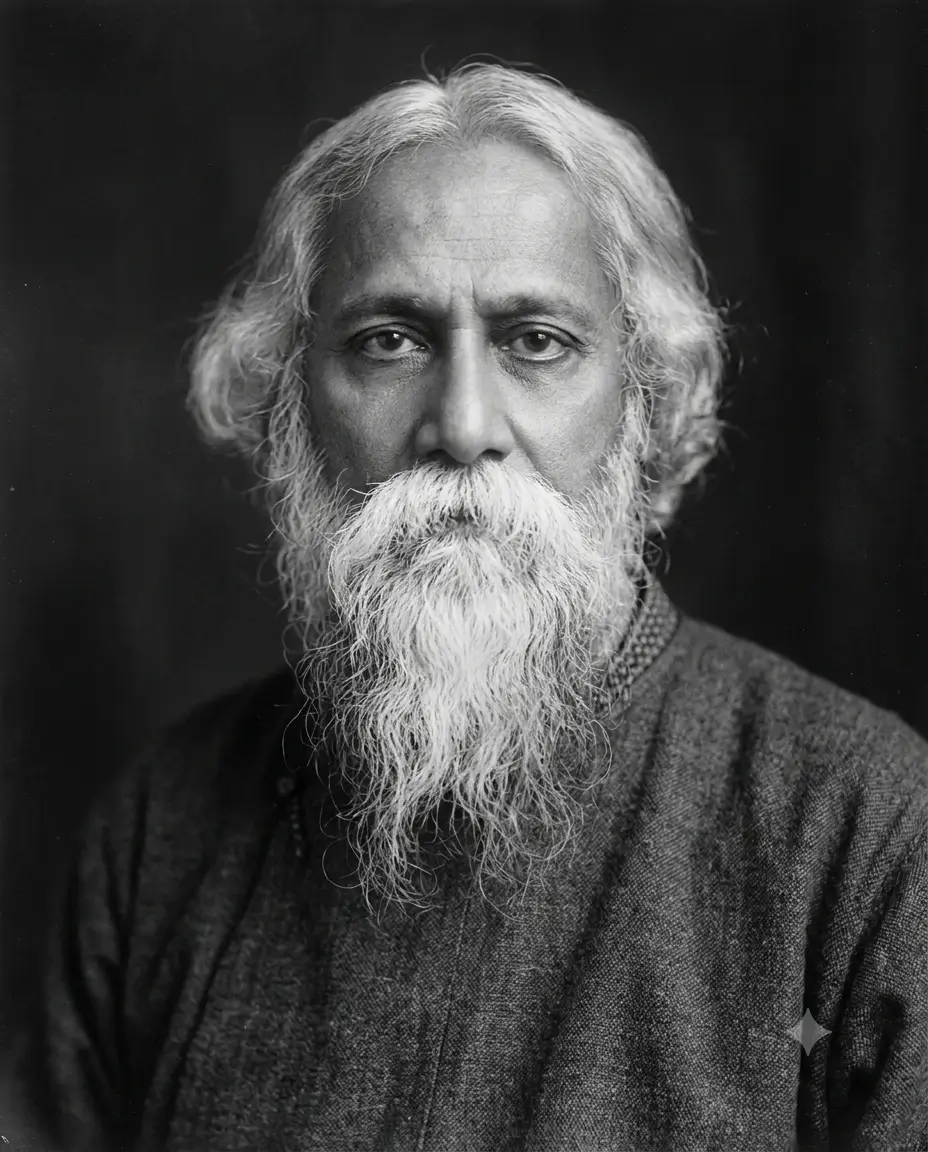
Rabindranath Tagore (1861–1941) was a Bengali poet, musician, and painter, central to the Bengali Renaissance. He became the first non-European to win the Nobel Prize in Literature (1913), awarded largely for Gitanjali (Song Offerings), his own English translation of selected Bengali poems.
About Gitanjali
Gitanjali is a collection of 103 prose poems, published in Bengali in 1910 and translated into English by Tagore himself in 1912. The collection explores spiritual longing, divine love, and the soul’s search for unity with the infinite — themes drawn from Vaishnav bhakti poetry and Upanishadic thought.
| Aspect | Details |
|---|---|
| Original language | Bengali (1910) |
| English translation | By Tagore himself (1912) |
| Total poems (English edition) | 103 |
| Nobel Prize | 1913 (Literature) |
| Genre | Devotional / spiritual prose-poetry |
| Central theme | Union of the individual soul with the divine |
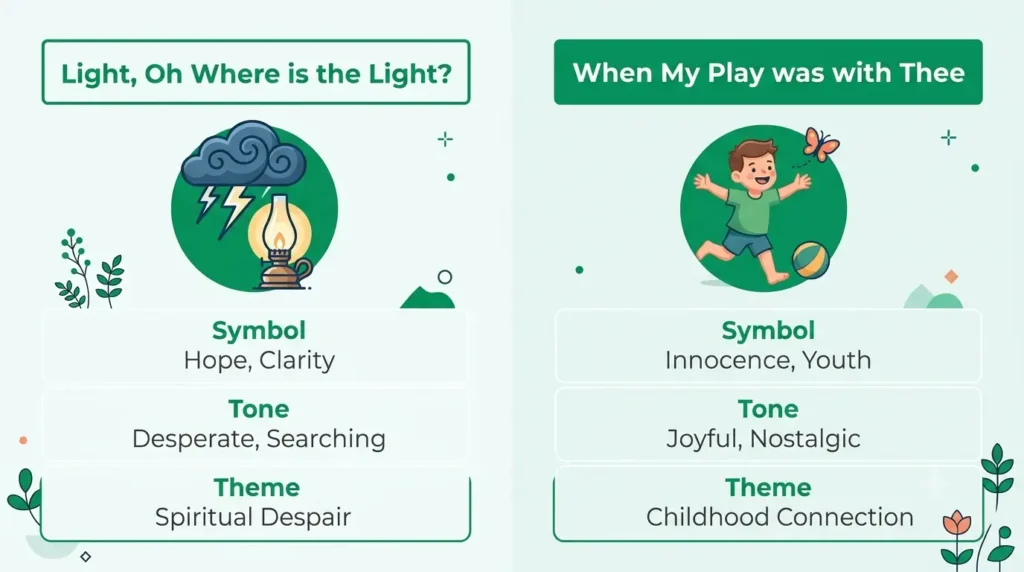
Quick Comparison: Both Poems at a Glance
| Feature | ‘Light, Oh Where is the Light?’ | ‘When My Play was with Thee’ |
|---|---|---|
| Poem number | XXVII | XCVII |
| Central symbol | Light / Darkness | Play (childhood innocence) |
| Emotional tone | Restless, searching, urgent | Nostalgic, wistful, tender |
| Core theme | Longing for spiritual clarity | Loss of innocence in the soul’s journey |
| Speaker’s state | Lost, seeking guidance | Remembering a carefree divine bond |
| Read full analysis | Read here → | Read here → |
Poem 1: ‘Light, Oh Where is the Light?’ — Quick Summary
The poet cries out for spiritual light amid inner darkness and confusion, searching for the truth and divine presence that always feel just out of reach.
👉 Read the full summary, line-by-line explanation, themes & PYQs
Poem 2: ‘When My Play was with Thee’ — Quick Summary
The poet looks back on a childhood marked by an innocent, playful closeness with the divine — a bond that grew distant and formal with age.
👉 Read the full summary, line-by-line explanation, themes & PYQs
Common Themes Across Both Poems
- Divine longing — the soul’s constant yearning to reconnect with the infinite
- Spiritual journey — movement from confusion/innocence toward deeper understanding
- Personal, first-person voice — direct, intimate address to the divine (“thee”)
Frequently Asked Questions
What is Unit 2B in DSC-12 about?
Unit 2B covers two poems from Tagore’s Gitanjali — ‘Light, Oh Where is the Light?’ and ‘When My Play was with Thee’ — prescribed under DSC-12: Indian Writing in English Translation.
Are these poems originally written in English?
No. Both were originally composed in Bengali and translated into English by Tagore himself for the 1912 edition of Gitanjali.
Why did Tagore win the Nobel Prize for Gitanjali?
The Nobel committee praised the profound spiritual sensitivity, freshness, and beauty of his verse, which made his English Gitanjali accessible to Western readers in 1913.
Related Notes:
Subscribe to keep reading
You've used your free notes for now. Get Delhi Pathshala Premium for unlimited access.
Subscribe — ₹29/30 days