
Contents
- Nature and scope of comparative politics
- Nature of comparative politics
- Importance of Comparative Politics
- Historical Development of Comparative Politics
- Evolution of Comparative Politics
- Main Theorists and Their Contributions
- Scope of Comparative Politics
- Areas of Study
- Comparative Politics vs. International Relations
- Why Comparison is important
- Purpose of Comparison
- Identifying Patterns and Differences
- Benefits of Comparative Analysis
- Policy Formulation
- Enhancing Political Knowledge
- Challenges in Comparison
- Cultural and Contextual Differences
- Methodological Issues
- Understanding Comparative Method: How to Compare Countries
- Large N Studies
- Definition and Examples of Large N Studies
- Small N Studies
- Definition and Examples of Small N Studies
- Single Country Studies
- Case Study Method
- Going Beyond Eurocentrism
- What is Eurocentrism?
- Impact on Comparative Politics
- Incorporating Non-Western Perspectives
- Importance of Diverse Viewpoints
- Case Studies from Asia, Africa, and Latin America
- Methodological Adjustments
- Adapting Comparative Methods
- Ensuring Inclusivity and Relevance
- Top DU Previous Year Questions (PYQs)
- FAQs on Nature and Scope of Comparative Politics
[FEATURED IMAGE — see Image Plan #1 below]
In this post, notes of “Unit 1: Understanding Comparative Politics” from “DSC – 5: Methods and Approaches in Comparative Political Analysis“ are given, covering the meaning, nature, scope, historical evolution, and Eurocentrism debate in Comparative Politics — helpful for BA (Hons.) Political Science students preparing for DU semester exams.
📌 Also check: Approaches to Studying Comparative Politics and the complete DU Political Science Syllabus for this paper.
Nature and scope of comparative politics
Nature of comparative politics
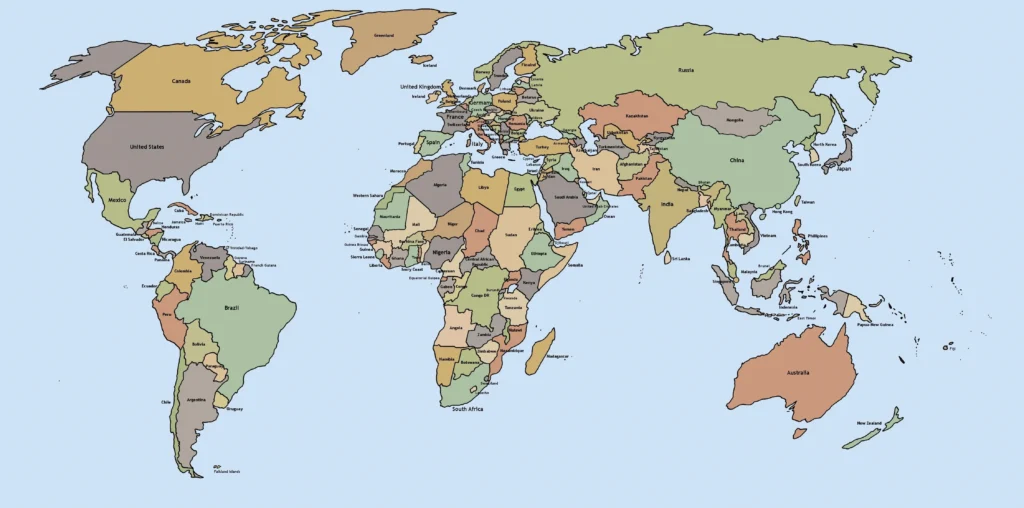
Comparative Politics is a part of political science that studies and compares how different countries and regions run their governments. According to Britannica’s overview of comparative politics, the field systematically examines political institutions and behaviour across nation-states to identify patterns of governance.
It looks at how political systems work, what affects political results, and how history, culture, and institutions influence how power is shared.
Key parts of Comparative Politics include:
– Comparing political systems: Such as Parliamentary vs. Presidential or Federal vs. Unitary.
– Studying institutions: Like governments, legislatures, election systems, and constitutions.
– Analyzing political behavior: Including voting habits, public participation, and opinions.
– Comparing countries and regions: Using examples from various places to see common trends.
In short, Comparative Politics helps scholars understand political behavior and how institutions work by finding both differences and similarities among systems. For a deeper look at how scholars actually carry out this comparison, see our detailed post on Approaches to Studying Comparative Politics.
Importance of Comparative Politics
The importance of Comparative Politics in political science can be seen in these points:
- Better Understanding of Political Systems:
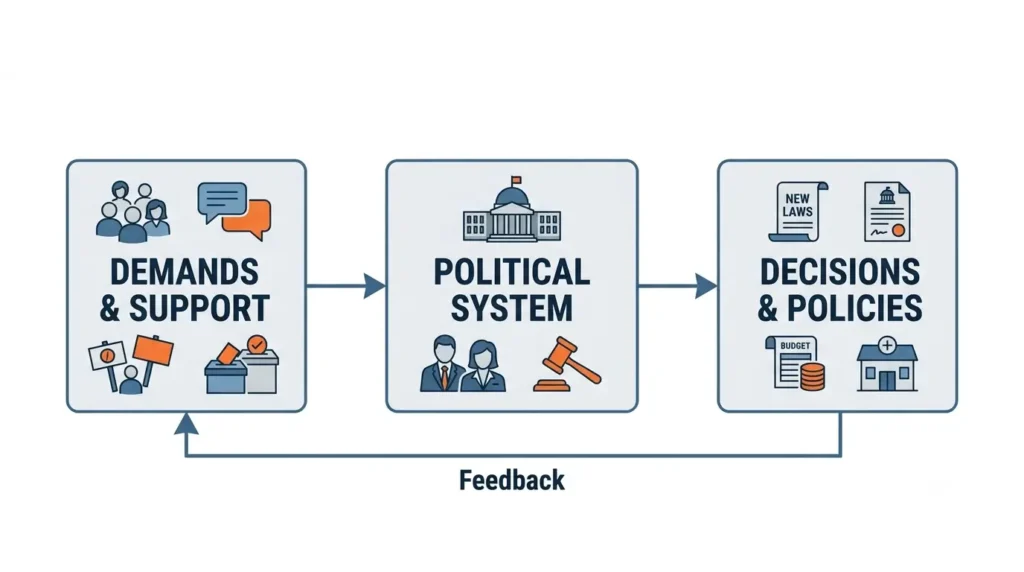
– Comparing different systems helps scholars see the strengths and weaknesses of each type of government.
– It explains why some systems are more stable or democratic and what leads to political success or failure.
- Building and Testing Theories:
– Comparative Politics aids political scientists in creating and testing theories. Studying different cases helps in understanding ideas like democratization and authoritarianism.
- Policy Analysis and Application:
– Governments and organizations use insights from comparisons to create better policies. For example, learning from successful democracies can help improve governance in developing countries.
- Understanding Global Political Trends:
– Comparative Politics helps to spot global trends like the rise of populism or changes in democracy. It aids in predicting political changes and understanding how economics, society, and technology affect political systems.
- Encouraging Global Awareness and Diversity:
– Comparing countries helps students and scholars appreciate different cultures and institutions. It promotes understanding of how local history, culture, and geography influence political choices and outcomes.
In summary, Comparative Politics is essential for learning how different political systems function, improving governance, and advancing political science through research and theory development.
| Related Topics | |
|---|---|
| Types of Political Culture in Comparative Politics | Approaches to Studying Comparative Politics: Political Economy |
Historical Development of Comparative Politics
Evolution of Comparative Politics
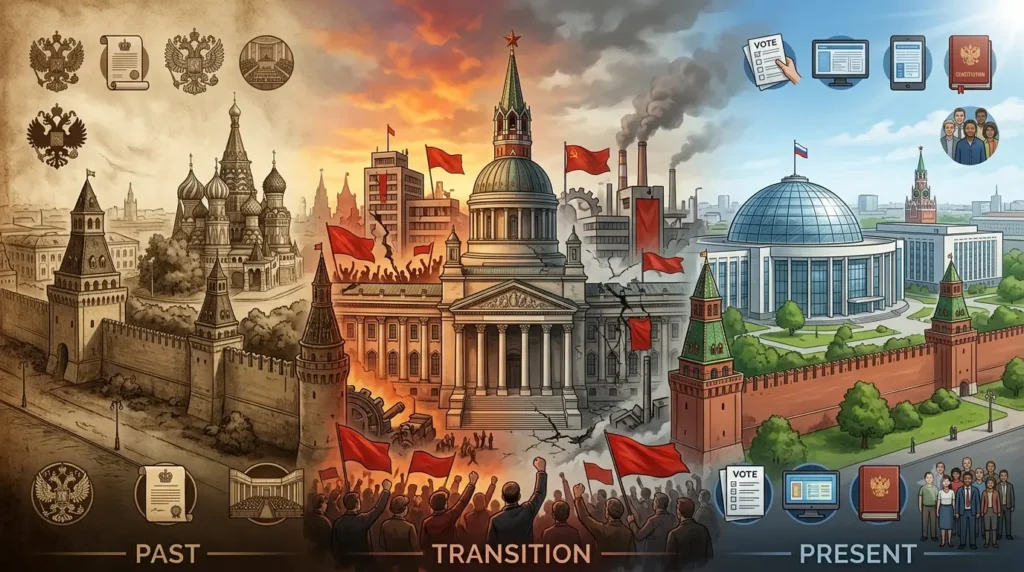
Comparative Politics is a branch of political science that has changed over many years, starting from simple descriptions of political systems to more detailed and theory-based studies.
- Early Days (Classical Foundations):
– The roots of Comparative Politics can be traced back to ancient thinkers like Aristotle. In his book Politics, he compared different government types in ancient Greece, categorizing them as monarchies, aristocracies, and democracies. He focused on what makes a good political system.
- 19th Century – Beginning of Comparative Method:
– The formal study of Comparative Politics began in the 1800s. Early thinkers like Montesquieu (in The Spirit of the Laws) looked at different political systems and how they affect freedom. He introduced the idea of separation of powers in government, which is still important today.
– Karl Marx analyzed political systems based on economic factors and social classes, emphasizing how economies shape political structures.
- Early 20th Century – Institutionalism:
– In the early 1900s, Comparative Politics focused on comparing formal institutions like laws and government structures (e.g., parliaments). This method, called institutionalism, looked at how these institutions affect political results.
– Scholars like Max Weber studied the role of bureaucracies and authority in shaping political systems. (Read our related notes: New Institutionalism and Old Institutionalism)
- Post-World War II – Behavioral Revolution:
– In the 1950s and 1960s, there was a big change with the behavioral revolution. This movement focused on studying real political behavior (like voting) instead of just institutions. Researchers started using surveys and statistics.
– Gabriel Almond and Sidney Verba‘s study The Civic Culture (1963) was important in showing how culture affects political behavior. Read more about this in Types of Political Culture in Comparative Politics.
- Late 20th Century – New Institutionalism and Modern Comparative Politics:
– In the late 1900s, scholars combined institutional analysis with behavioral studies, creating new institutionalism. This approach considered both formal institutions and informal practices.
– Topics like democratization, authoritarianism, and globalization became more important, with researchers using large data sets and case studies.
- Today’s Trends:
– Today, Comparative Politics includes ideas from various fields like economics and sociology. Important topics include democratization, political development, identity politics, and the effects of globalization on local politics.
– Research methods have become more advanced, using both quantitative and qualitative techniques.
Main Theorists and Their Contributions
- Aristotle (384–322 BCE)

– Considered the first political scientist, Aristotle’s work in Politics categorized different governments and analyzed their strengths and weaknesses.
- Montesquieu (1689–1755)

– In The Spirit of the Laws (1748), Montesquieu compared political systems and introduced the idea of the separation of powers.
- Karl Marx (1818–1883)

– Marx’s approach looked at how economic conditions relate to political structures and class relations.
- Max Weber (1864–1920)

– Weber studied bureaucracies and different types of authority, helping to understand governance.
- Gabriel Almond (1911–2002)
– Almond focused on political culture and how cultural values impact politics, notably in his study The Civic Culture (1963).
- Samuel P. Huntington (1927–2008)

– Huntington examined political development and democratization, contributing to the understanding of political changes.
- Robert Dahl (1915–2014)

– Dahl’s studies on democracy and pluralism introduced concepts like polyarchy, analyzing how democratic systems work.
- Arend Lijphart (b. 1936)
– Lijphart researched consociational democracy and electoral systems, focusing on how divided societies can achieve stable governance.
In summary, Comparative Politics has evolved from basic analysis to a complex field that combines different methods and perspectives, making it crucial in political science.
Scope of Comparative Politics
Areas of Study
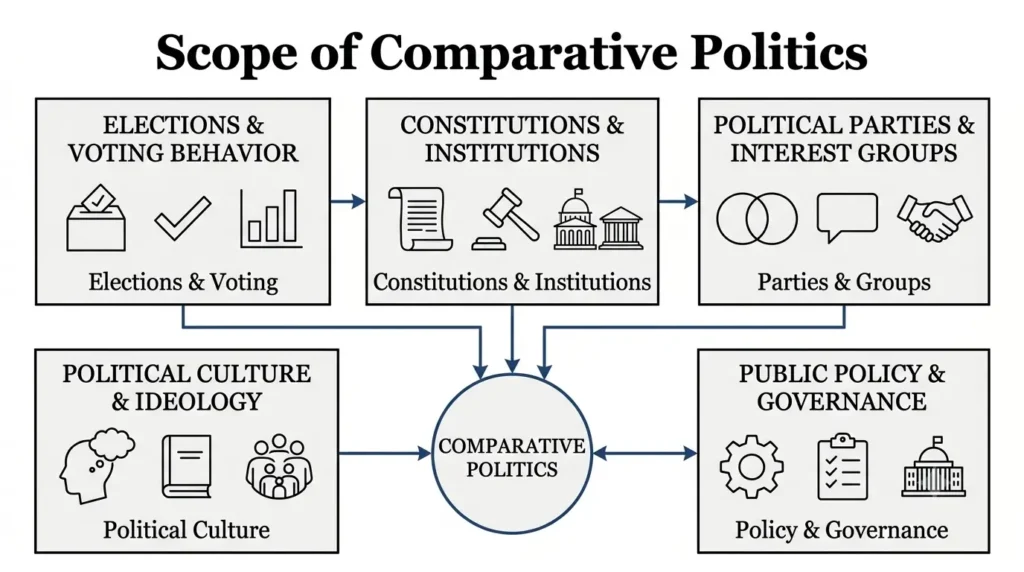
Comparative Politics studies various topics related to politics within countries. Here are the main areas of study:
- Political Systems and Regimes – It looks at different types of political systems like democracies and authoritarian governments. It compares how these systems work and how power is shared, including presidential and parliamentary systems and how federal and unitary systems differ.
- Constitutions and Legal Systems – This area studies how constitutions are created and operate in different countries, and compares court systems and how laws impact politics and people’s rights.
- Electoral Systems and Voting Behavior – It compares different voting systems and how they affect election results, including how people vote, election processes, party systems, and what influences voter turnout.
- Political Parties and Interest Groups – This area focuses on the role of political parties and groups in different political systems, and how parties form coalitions and how interest groups affect laws.
- Political Culture and Ideology – Political culture includes the values and beliefs that influence political actions in different countries, examining how ideas like liberalism or socialism affect political systems.
- Governance and Policy-Making – It studies how governments make decisions and put policies into action, comparing how different governments manage issues like healthcare and education.
- Political Development and Change – This area looks at how political systems change over time, including how democracies develop and how political institutions grow or shrink.
- Identity Politics – It examines how factors like ethnicity, religion, and gender affect political outcomes and participation.
- Conflict, Revolutions, and Political Violence – This area studies the causes of political violence, including wars and revolutions, and how to resolve conflicts.
- Political Economy – It looks at how political and economic systems interact, including the study of different economic systems and how they affect politics.
Comparative Politics vs. International Relations
| Aspect | Comparative Politics | International Relations (IR) |
|---|---|---|
| Focus | Examines internal political systems in individual countries, comparing structures and behaviors | Studies interactions between countries and global actors, focusing on diplomacy, conflict, and global issues |
| Main Ideas | Political systems, elections, political development | National security, international law, global cooperation |
| Methodology | Uses case studies, data analysis to examine internal politics | Applies theories to explain state behavior, analyzing international conflicts and agreement |
| Levels of Analysis | Primarily domestic, within individual countries | Primarily international, between countries and global organizations |
| Scope | Micro-level focus on individual countries | Macro-level focus on global systems and state interactions |
| Summary | Studies internal workings of countries, essential for understanding national governance | Studies global interactions, crucial for understanding international diplomacy and global relations |
Why Comparison is important
Purpose of Comparison
The main goal of comparing in Comparative Politics is to better understand how different political systems and processes work by looking for similarities and differences among countries. This helps experts learn about the variety and common traits of how governments operate, which can improve governance, democracy, and policy-making.
1. Understanding Political Systems
– Comparing different political systems helps researchers understand how governments operate in various situations. For instance, looking at a parliamentary system (like the UK) versus a presidential system (like the US) helps us see the strengths and weaknesses of each.
2. Find Common Principles of Governance
– Comparison helps identify general rules that can apply to various political systems. It helps explain why some institutions succeed in certain places but fail in others, which can inform how to create effective political systems.
3. Assess Impact of Political Institutions
– Comparative Politics allows for examining how political institutions, like electoral systems or judicial frameworks, affect political results. For example, comparing different voting systems can show how they influence political representation and party behavior.
4. Explore Political Behavior and Public Opinion
– Comparisons let researchers study how people interact with politics in different societies. It also aids in understanding why some groups support authoritarian leaders or resist democratic changes.
5. Examine Development and Democratization
– A key area in Comparative Politics is studying political development and democratization. For example, looking at Eastern European countries after the Soviet Union’s fall can show what led to successful or failed democratization.
Identifying Patterns and Differences
- Spot Patterns in Political Systems – Comparative Politics aims to find recurring patterns in political behavior and institutions, like how economic growth can encourage democracy.
- Highlight Key Differences – Comparing political systems reveals differences that explain why some succeed while others do not, such as how democracies versus authoritarian systems manage power and civil rights.
- Understand Unique Contexts – Comparative Politics acknowledges that each country has its own unique history, culture, and geography, preventing overgeneralization.
- Test Theories and Ideas – Comparing political systems allows researchers to test theories, such as the link between economic growth and democracy, across countries at different development stages.
- Suggest Alternative Solutions – Countries dealing with issues like corruption or poverty can learn from how others have tackled similar challenges.
- Avoid Ethnocentrism – Comparative Politics promotes looking beyond one’s own country’s system to avoid biases, recognizing that no single governance model fits all.
Summary: The purpose of comparison in Comparative Politics is to understand political systems better, find patterns and differences, test theories, and propose solutions to political issues.
Benefits of Comparative Analysis

Policy Formulation
Comparative analysis is important for creating good public policies by learning from the experiences of different countries. Here are some main benefits:
- Learning from Others – Leaders can see how other countries have solved similar problems, choosing policies more likely to work while avoiding costly errors.
- Adopting Best Practices – For instance, Finland’s successful education system has been studied by other countries wanting to improve their schools.
- Customizing Policies for Local Needs – Comparative analysis helps leaders adapt successful ideas to fit their own country’s needs and culture, such as India or the US learning from federations like Germany or Canada.
- Predicting Results of Policies – When looking into universal basic income (UBI), countries might compare pilot programs in Finland or Alaska to see how it could impact poverty and jobs.
- Tackling Global Issues – During the COVID-19 pandemic, countries that managed the virus well, like South Korea and New Zealand, served as models for others.
- Encouraging New Ideas in Government – Countries facing urban challenges might look at Singapore’s innovative housing policies for inspiration.
Enhancing Political Knowledge
- Understanding Political Systems – Comparative analysis broadens our view of different political systems, identifying why some systems work better in some places than others.
- Building and Testing Theories – By looking at multiple cases, researchers can find common patterns that affect political outcomes.
- Questioning Assumptions – Comparing the economic success of authoritarian countries like China with democratic ones questions the idea that democracy always leads to economic growth.
- Understanding Political Change – Looking at Eastern European countries after communism helps understand how authoritarian governments fall.
- Providing a Global View – Comparative analysis gives a global view of how international factors affect local politics.
- Developing Critical Thinking – Comparative analysis boosts critical thinking by encouraging evaluation of various governance models and policies.
- Increasing Civic Awareness – Understanding how other democracies tackle issues like voter participation can motivate citizens to seek reforms at home.
Challenges in Comparison
Comparative analysis has many benefits, but it also faces important challenges from the differences and complexities of political systems and the problems of collecting reliable data.
Cultural and Contextual Differences
| Challenge | Explanation |
|---|---|
| Cultural Differences | Western democracies often focus on individual rights, while other regions may value community or religious beliefs more — e.g., religion plays a small role in secular France but is central in Iran or Saudi Arabia. |
| Historical Background | Nations with histories of colonialism or civil war often have political situations that are hard to compare with stable Western democracies. |
| Geography and Economy | Comparing countries very different in size or resources may not show the true challenges each faces — Germany vs. Bangladesh, for example. |
| Differences in Institutions | The UK and India both have parliamentary democracies, but their cultural and institutional backgrounds differ significantly. |
| Norms and Expectations | What is seen as corruption in one country (e.g., patronage) might be considered normal political practice elsewhere. |
Methodological Issues
- Case Selection Bias – Comparing only wealthy democracies may make certain factors seem more important than they really are.
- Controlling Variables – Many elements, like history and economy, interact in ways that complicate the analysis of democratic transitions.
- Conceptual Equivalence – The idea of democracy may differ between Western countries and places where democratic practices mix with authoritarianism.
- Data Collection Issues – Countries with weak institutions may have incomplete or unreliable data on important political aspects.
- Over-Simplification – Labeling a regime as “authoritarian” may not show the different types of control within that system.
- Changing Political Systems – Comparing systems at one point in time may miss important transitions or reforms.
- Lack of Uniform Methods – Qualitative methods offer deep insights but may not be widely applicable, while quantitative methods allow broader comparisons but may miss detail.
Understanding Comparative Method: How to Compare Countries
In Comparative Politics, the Comparative Method is often used to study political systems.
Large N Studies
Definition and Examples of Large N Studies
Large N studies involve comparing many cases, usually more than 20 countries, using statistical methods like regression and correlation to find trends.
– Democracy Studies: Comparing democracy levels in many countries to see how economic growth affects democracy. – Human Rights and Development: Looking at how economic growth relates to human rights across different countries. – Voting Systems: Studying how different voting systems affect voter turnout and representation in many democracies.
Advantages: Generalizability, statistical power, cross-national comparisons, hypothesis testing, and replication.
Disadvantages: Over-simplification, loss of nuance, data quality limitations, difficulty controlling variables, ecological fallacy, and difficulty explaining causal mechanisms.
This method is useful for spotting trends but should be combined with other methods for a complete understanding of political systems.
Small N Studies
Small N studies analyze politics by looking closely at a small number of cases — usually between two and five — to understand specific political systems, events, or processes in detail.
Definition and Examples of Small N Studies
– Theda Skocpol’s study of revolutions: Compared the French, Russian, and Chinese revolutions to understand what caused these events. – Comparing democratic transitions: A study of how South Africa and Chile became democracies in the 1990s. – Robert Putnam’s study of Italian regional governments: Looked at 20 Italian regions to see how local traditions affected government performance.
Advantages: In-depth analysis, explaining causal mechanisms, flexibility, studying unique/rare cases, and building theories.
Disadvantages: Limited generalizability, selection bias, difficulty controlling variables, risk of over-interpretation, and time/resource intensity.
Single Country Studies
Single country studies look closely at one specific country to understand its political system and events, often using the case study method.
Case Study Method
– Studying Democracy in South Africa: How South Africa moved from apartheid to democracy in 1994. – Political Institutions in the UK: How Brexit affected the UK’s political system. – China’s Government System: How the Communist Party operates while modernizing.
Advantages: Comprehensive understanding, hypothesis generation, ideal for unique cases, policy relevance.
Disadvantages: Limited generalizability, selection bias, subjectivity, and lack of comparative control.
Going Beyond Eurocentrism
Eurocentrism is the belief that European culture and history are the most important ways to understand the world. This view often ignores the experiences and contributions of non-European societies, leading to a distorted view of global politics.
What is Eurocentrism?
– Definition: Eurocentrism focuses on European culture, history, and values as the main part of human progress, often assuming other societies will develop the same way Europe has.
– Historical Background: Eurocentrism began during the colonial era when European countries expanded their empires. European scholars viewed non-European societies as less developed, justifying colonial rule. Enlightenment ideas from the 18th century further strengthened this viewpoint, and 20th-century modernization theories suggested all societies would follow a similar path to Western nations. According to Stanford Encyclopedia of Philosophy’s entry on Eurocentrism, this framework has been widely critiqued by postcolonial scholars for privileging a single developmental trajectory.
Impact on Comparative Politics
- Bias in Research – Eurocentrism causes researchers to focus mainly on European political systems, missing important political dynamics in Africa, Asia, and Latin America.
- Oversimplified Political Models – Eurocentrism assumes all societies move from traditional to modern governance the same way, overlooking unique cultural paths.
- Ignoring Non-Western Theories – Political ideas from outside Europe are often overlooked, and indigenous governance systems are frequently ignored in favour of Western theories.
- Reinforcing Negative Stereotypes – Eurocentrism can create harmful stereotypes portraying non-European societies as unstable or corrupt.
- Poor Policy Decisions – Policies based on Eurocentric views can fail when applied to non-European contexts, as seen in post-Soviet countries where rapid reforms ignored local realities.
Incorporating Non-Western Perspectives
Importance of Diverse Viewpoints
- Expanding Understanding – Looking at governance in indigenous cultures shows alternative political ideas focused on community and sustainability.
- Improving Political Theory – African political ideas like Ubuntu emphasize community and connections, offering different perspectives on governance and human rights.
- Tackling Global Issues – Indigenous knowledge can provide useful ways to handle environmental challenges that Western methods may ignore.
- Challenging Stereotypes – Engaging with non-Western stories corrects false ideas about instability and corruption in these societies.
- Promoting Inclusivity – An inclusive approach recognizes the voices of non-Western societies, leading to fairer discussion in political science.
Case Studies from Asia, Africa, and Latin America
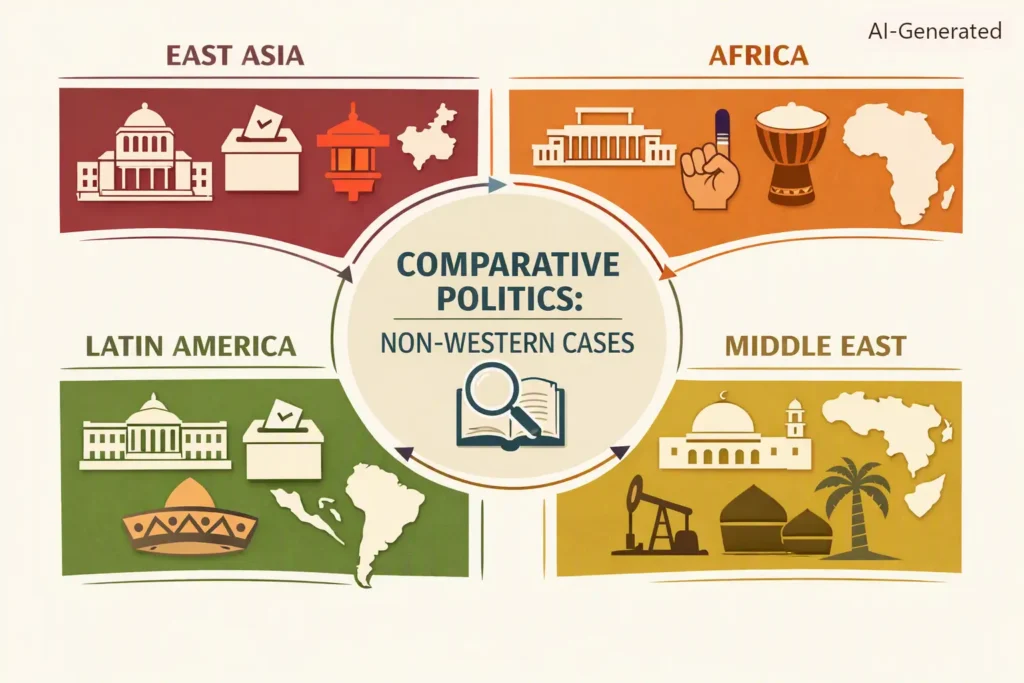
- Asia: Confucianism in East Asian Politics – Countries like China, South Korea, and Japan have been shaped by Confucian ideas focusing on social harmony and the state’s importance.
- Africa: Ubuntu and Governance – Ubuntu, from Southern Africa, highlights community and shared humanity, as seen in South Africa’s Truth and Reconciliation Commission.
- Latin America: Participatory Democracy in Venezuela – Venezuela’s Bolivarian Revolution aimed for participatory democracy, encouraging local involvement in governance.
- Middle East: Islamic Governance and Democracy – In Iran and Turkey, Islamic principles shape governance and political identity.
- Indigenous Politics in North America – Indigenous governance, like the Iroquois Confederacy, focuses on consensus and collective decision-making.
Methodological Adjustments
Adapting Comparative Methods
- Widening Research Examples – Researchers should look at more countries, especially from Asia, Africa, and Latin America, rather than focusing only on Western democracies.
- Using Both Qualitative and Quantitative Methods – Mixing interviews with survey data gives a better understanding of political issues.
- Focusing on Context – Researchers must consider the unique history and culture of each place, such as how colonial history impacts current governance in African countries.
- Combining Different Study Methods – Mixed methods, including historical studies and statistical data, allow for a thorough look at political issues.
- Looking at History – Historical analysis helps understand how past events, like different colonial histories, shape current political situations.
Ensuring Inclusivity and Relevance
- Involving Local Experts – Collaborating with universities in Africa or Latin America provides deeper insights into local politics.
- Recognizing Local Knowledge – Studying indigenous governance in North America shows leadership styles that differ from Western ideas.
- Addressing Relevant Issues – Research should focus on issues important to non-Western communities, like social justice and environmental challenges.
- Being Aware of Bias – Researchers should be aware of how their own background may affect their work.
- Sharing Research Findings – Making research accessible through community workshops helps translate academic research into useful local information.
Conclusion: Changing our methods is important to include non-Western views in comparative politics. By broadening research examples, mixing methods, and focusing on context, researchers can better understand global political issues while supporting fairer discussions in political science.
Top DU Previous Year Questions (PYQs)
- Critically examine the changing nature and scope of comparative politics after the Second World War. (DU Semester Exam, 2024)
- What do you understand by Eurocentrism? How has comparative politics transcended Eurocentrism in the contemporary world? (DU Semester Exam)
- Although the focus of comparative politics is shifting beyond Eurocentrism, the methodologies and approaches remain the same. Comment. (DU Semester Exam, 2024)
- What do you understand by comparative politics? Explain its nature and scope. (DU BA Political Science Exam)
- Critically examine the nature and scope of comparative politics/government. (DU BA Prog. Political Science Exam)
- Distinguish between Comparative Politics and Comparative Government. How has the scope of the discipline expanded after decolonisation? (DU Semester Exam)
💡 Exam Tip: Questions 1, 3, and 6 are frequently repeated in different wording almost every year — master the “Post-WWII behavioral revolution” and “Eurocentrism critique” sections above thoroughly, as most long-answer questions are built around these two themes.
FAQs on Nature and Scope of Comparative Politics
What is the simplest definition of comparative politics?
Comparative Politics is the branch of political science that studies and compares the political systems, institutions, and behaviour of different countries to identify patterns of similarity and difference in how power is organised and exercised.
Who is considered the father of comparative politics?
Aristotle is widely regarded as the father of comparative politics. In his work Politics, he studied and classified around 158 Greek constitutions, comparing their structures and outcomes — laying the foundation for the comparative method.
What is the difference between comparative politics and comparative government?
Comparative government has a narrower, more traditional scope — mainly comparing formal government structures like legislatures, executives, and constitutions. Comparative politics has a much wider scope, also including informal political behaviour, political culture, elections, interest groups, and processes beyond the state.
What are the two main types of comparative studies?
The two broad approaches are Large N studies (comparing many countries statistically, usually 20+) and Small N studies (in-depth comparison of a few cases, usually 2–5), along with single-country case studies as a related third approach.
Why is comparative politics important for DU political science students?
It builds the analytical foundation for understanding how different political systems function, which is essential not just for DSC-5 exams but also for later papers on political theory, Indian government, and international relations, as well as for competitive exams like UPSC.
What does Eurocentrism mean in comparative politics?
Eurocentrism refers to the tendency to treat European and Western political experience as the universal standard for judging and explaining political development everywhere else, often ignoring the distinct historical and cultural paths of Asian, African, and Latin American countries.
Subscribe to keep reading
You've used your free notes for now. Get Delhi Pathshala Premium for unlimited access.
Subscribe — ₹29/30 days