
Contents
- 1. Taiping and Boxer Movements — Genesis, Ideology, Nature
- 1.1 Introduction to Popular Movements
- 1.2 Taiping Movement (1850–1864)
- 1.3 Boxer Movement (1899–1901)
- 2. Self-Strengthening Movement (1861–1895)
- 3. Hundred Days of Reform (1898)
- 4. Taiping vs. Boxer Movement: Quick Comparison
- 5. Timeline of Events
- 6. Previous Year Questions (DU BA Hons. History, DSC-3)
- 7. FAQs
Quick Summary: This unit covers four defining episodes of 19th-century China’s crisis and response — the Taiping Rebellion (1850–64) and Boxer Uprising (1899–1901) as popular movements against Qing rule and foreign influence, and the Self-Strengthening Movement (1861–95) and Hundred Days’ Reform (1898) as elite-driven attempts at modernization. Together they explain why the Qing dynasty finally collapsed in 1911.
In this post, notes of “Unit 2: Popular Movements and Reforms in the 19th Century” from “DSC-3: History of Modern China 1840-1950s” are given, useful for BA (Hons.) History students at Delhi University.
📌 Also check: DU Semester 3 Syllabus 2026-27 | Previous unit: Late Imperial China and Western Imperialism | Next unit: Emergence of Nationalism
1. Taiping and Boxer Movements — Genesis, Ideology, Nature
1.1 Introduction to Popular Movements
Popular movements in 19th-century China were large groups of people coming together to fight against social, economic, and political problems. These movements often started because of unfair treatment, foreign control, and unhappiness with the Qing dynasty.
Characteristics of popular movements:
- Mass mobilization — peasants, workers, and marginalized groups joined together.
- Charismatic leadership — strong leaders inspired mass support.
- Rejection of the status quo — movements sought to change existing political, economic, or social systems.
- Religious or ideological beliefs — the Taiping and Boxer uprisings drew on religious or nativist ideas.
- Violent resistance — often provoking harsh government reaction.
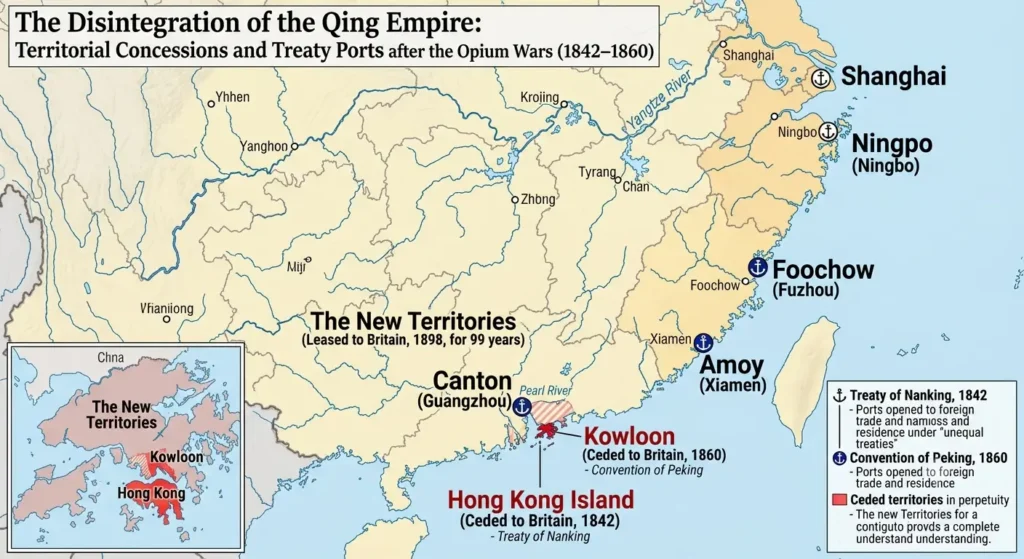
Historical background: By the early 19th century, the Qing dynasty was weakened by corruption, poor administration, and foreign pressure. The First Opium War (1839–1842) and Second Opium War (1856–1860) ended in unequal treaties that ceded territory like Hong Kong and granted extraterritorial rights to foreigners — a period historians often call China’s “Century of Humiliation” — deepening resentment toward foreign missionaries and Western powers, and setting the stage for movements like the Boxer Uprising.
1.2 Taiping Movement (1850–1864)
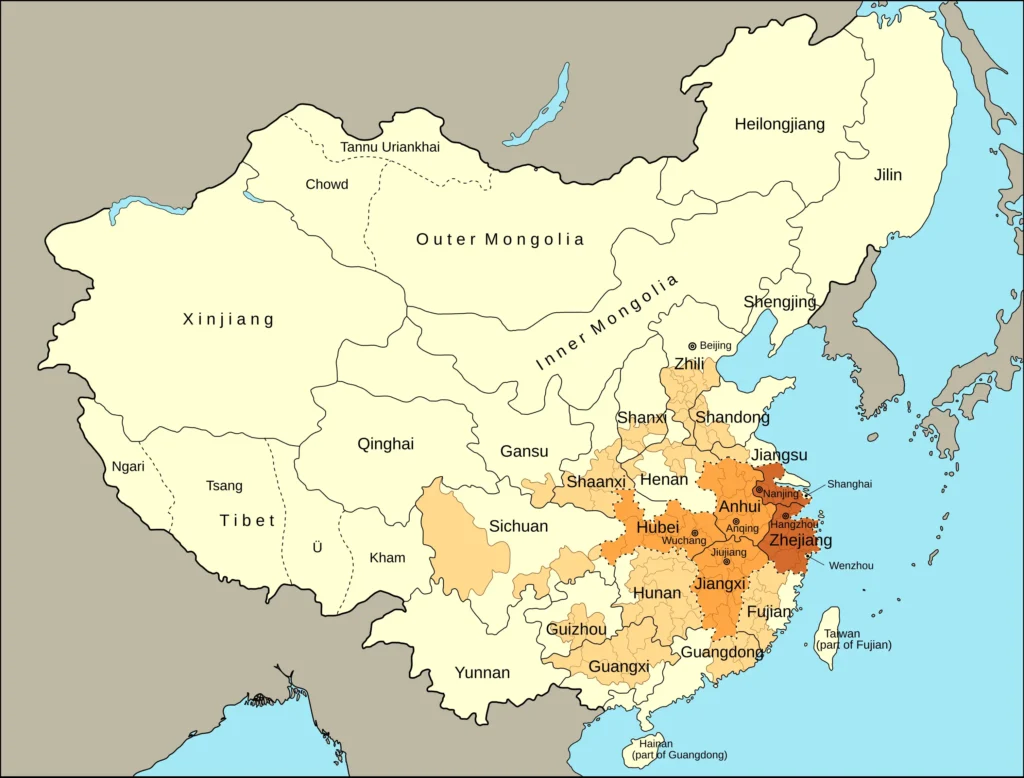
Genesis: The Taiping Movement began in the 1850s, led by Hong Xiuquan, a failed civil-service examination candidate who experienced a religious vision convincing him he was the younger brother of Jesus Christ. He gathered peasant support in southern China and founded the Taiping Heavenly Kingdom in 1851. According to Britannica’s account of the Taiping Rebellion, the movement’s army swelled to over a million men and women, with women treated as equals — a genuinely radical stance for the time.
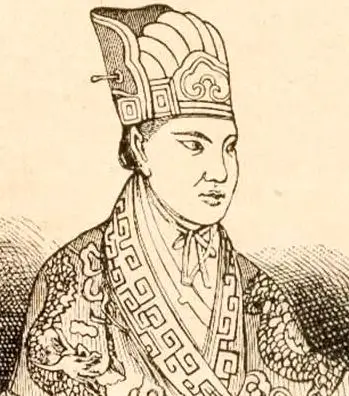
Ideology: Taiping belief blended Christianity with elements of Confucianism and Daoism, aiming for a theocratic state with strict moral codes. The movement banned opium, alcohol, gambling, and foot-binding, and proposed:
- Land redistribution — abolishing private property, sharing land equally.
- Gender equality — expanded rights for women, including military service.
- Communal living — early socialism-like economic reforms.
Nature of the movement: The Taiping army, led by Hong and generals like Yang Xiuqing and Li Xiucheng, captured Nanjing in 1853, renaming it Tianjing and making it their capital. Internal power struggles and strong Qing/Western counterattacks eventually led to their defeat in 1864. The Taiping Rebellion (1850–1864) remains one of the deadliest conflicts in history, with an estimated 20–30 million deaths. Though defeated, it fatally weakened the Qing dynasty and opened the door to greater foreign influence.
1.3 Boxer Movement (1899–1901)
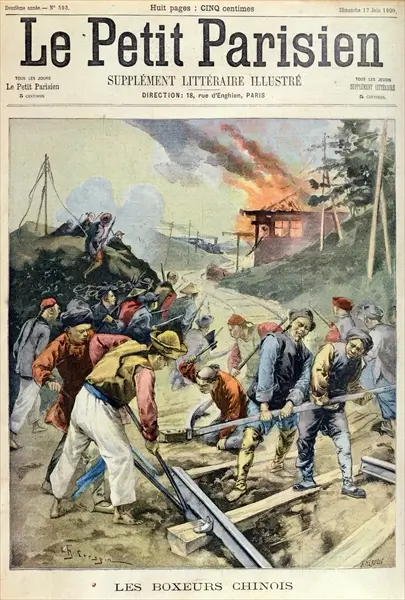
Genesis: The Boxer Uprising grew from rising anger against foreigners, Christians, and imperialism in China. The Boxers — a secret society called the Yihequan (“Righteous and Harmonious Fists”) — practiced martial arts and believed rituals made them invulnerable to harm. Per the Britannica overview of late Qing China, the group’s origins likely trace to the White Lotus sect and possibly self-defense militias formed during the Taiping Rebellion. The movement spread quickly across northern China among peasants angered by missionary influence and foreign encroachment.
Ideology: The Boxers opposed the spread of Christianity and targeted foreign missionaries and Chinese converts, aiming to revive traditional Chinese customs and expel foreign influence using martial arts and folk-spiritual practices.
Nature of the movement: Organized as scattered local groups rather than a central command, the Boxers attacked foreign nationals and Chinese Christians from 1899. The Qing government, after initial hesitation, backed the Boxers, provoking the Eight-Nation Alliance to intervene militarily. Beijing was captured in 1900, forcing the Qing to accept the harsh terms of the Boxer Protocol (1901), including heavy indemnities and permission for foreign troops to be stationed in Beijing. This humiliation directly fed into the momentum for the 1911 Xinhai Revolution, which ended the Qing dynasty.
2. Self-Strengthening Movement (1861–1895)
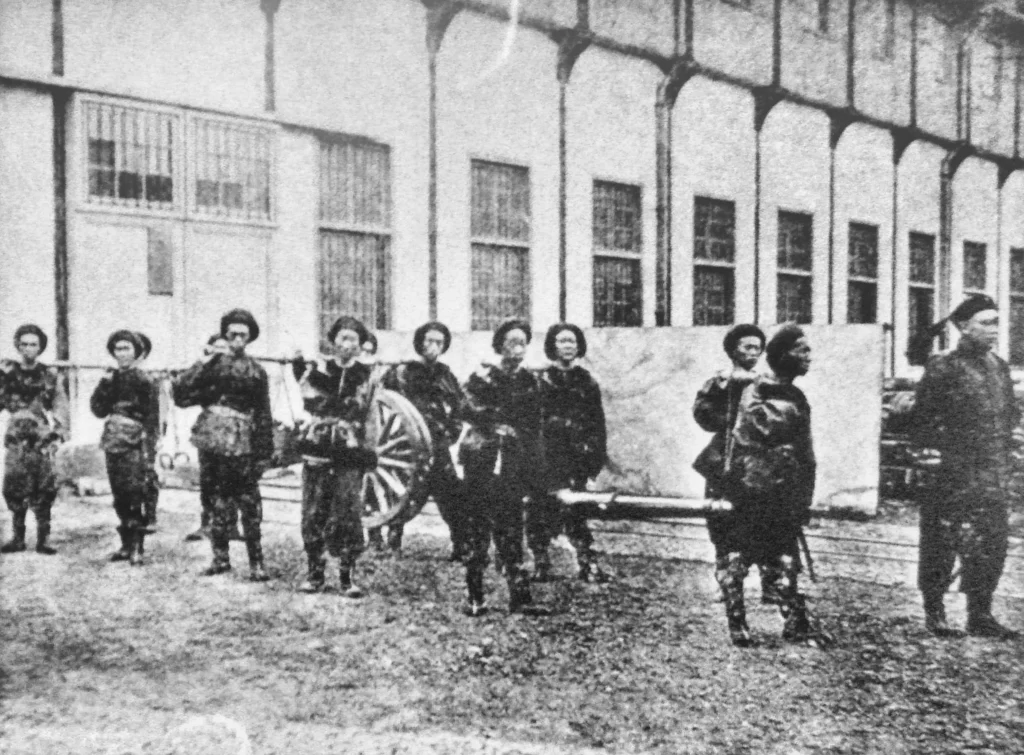
Background & Goals: Launched after the Taiping Rebellion and Second Opium War exposed Qing weakness, the Self-Strengthening Movement aimed to modernize China’s military, economy, and society while preserving traditional Confucian values — a philosophy summarized by the movement’s own motto, “Chinese learning as the substance, Western learning for application.”
Key people: Zuo Zongtang led military reforms; Li Hongzhang established modern military schools and industrial projects; Wang Tao and Kang Youwei pushed for cultural and political change.
Main actions: Modernizing the military with Western technology, establishing arsenals and shipyards, launching railroad and mining projects, sending study missions abroad, and translating Western texts.
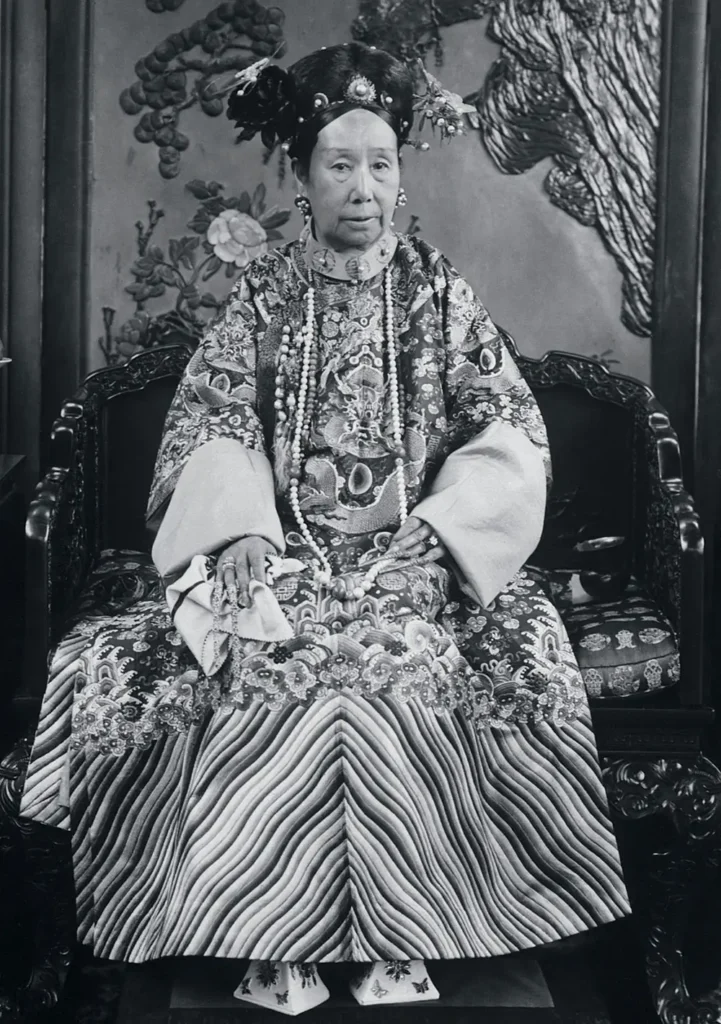
Challenges: Resistance from conservative Confucian officials, caution from Empress Dowager Cixi, chronic corruption, and mounting pressure from Britain and a rapidly modernizing Japan.
Results: A mixed success — some arsenals and railroads thrived, but the military failed to withstand Japan in the First Sino-Japanese War (1894–95), exposing the limits of piecemeal modernization and setting up demand for deeper reform.
3. Hundred Days of Reform (1898)
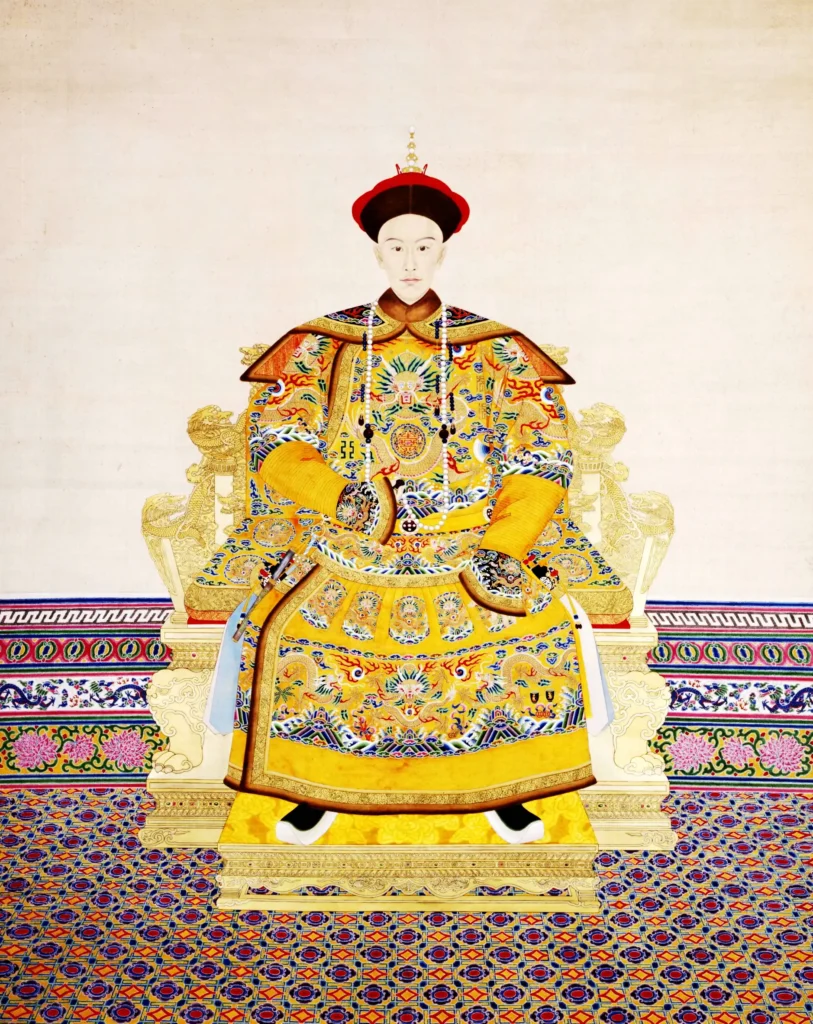
Background: China’s defeat in the First Sino-Japanese War revealed how far behind it had fallen. Reformers Kang Youwei and Liang Qichao, inspired by Japan’s Meiji modernization, pushed Emperor Guangxu toward radical change.
Key reforms: A proposed constitutional monarchy, merit-based government appointments, a new legal system, modern schools teaching science and technology, and a Western-modeled army.
Major figures: Emperor Guangxu (progressive reformer), Kang Youwei and Liang Qichao (chief reform architects), and Empress Dowager Cixi (leading opponent).
Results: As detailed in Britannica’s account of the 1898 reform crisis, conservative resistance was intense from the start. In September 1898, Cixi staged a coup, placing Guangxu under house arrest and ending the reforms after just 104 days — reformers were imprisoned or exiled. The failure discredited moderate reform as a path forward and accelerated revolutionary sentiment, feeding directly into the Boxer Uprising and, ultimately, the 1911 Xinhai Revolution.
Both the Self-Strengthening Movement and the Hundred Days of Reform were serious attempts to modernize China from within. Their failures — much like the popular uprisings above — exposed the same underlying truth: the Qing dynasty could not reform its way out of the crisis, and revolutionary change became inevitable.
4. Taiping vs. Boxer Movement: Quick Comparison
| Aspect | Taiping Movement (1850–64) | Boxer Movement (1899–1901) |
|---|---|---|
| Leadership | Hong Xiuquan (centralized) | No central leader (local militias) |
| Ideology | Christian-influenced, egalitarian | Anti-foreign, anti-Christian, nativist |
| Social stance | Gender equality, land redistribution | Restore traditional Chinese order |
| Target | Qing dynasty itself | Foreigners, missionaries, Chinese Christians |
| Government response | Fought and suppressed by Qing | Initially backed, then abandoned by Qing |
| Outcome | ~20–30 million deaths; Qing severely weakened | Boxer Protocol 1901; foreign troops in Beijing |
| Long-term effect | Exposed Qing military/administrative failure | Directly triggered 1911 Xinhai Revolution |
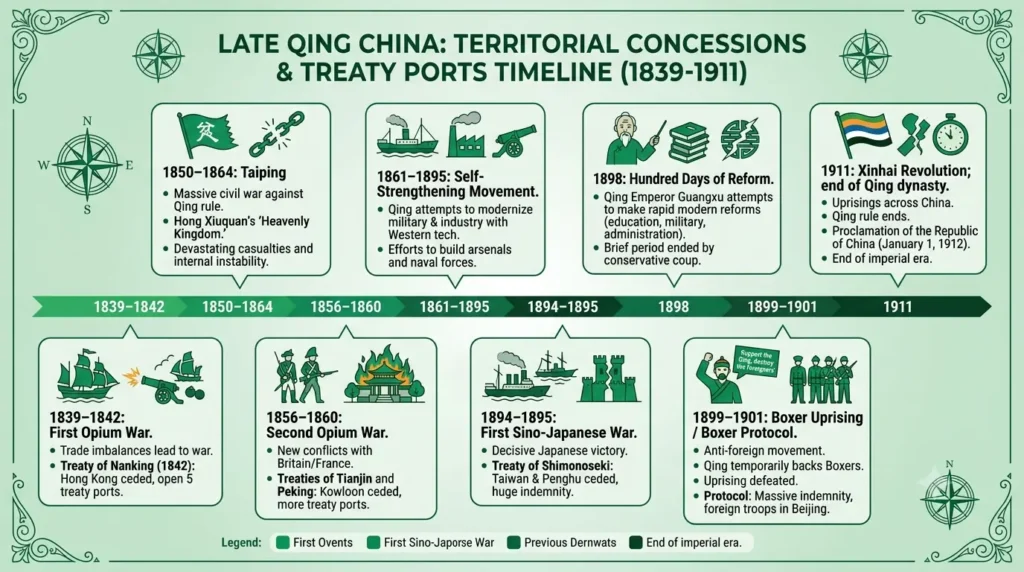
5. Timeline of Events
[IMAGE 9 — see Image Plan: Horizontal timeline graphic]
- 1839–1842 — First Opium War
- 1850–1864 — Taiping Rebellion
- 1856–1860 — Second Opium War
- 1861–1895 — Self-Strengthening Movement
- 1894–1895 — First Sino-Japanese War
- 1898 — Hundred Days of Reform
- 1899–1901 — Boxer Uprising / Boxer Protocol
- 1911 — Xinhai Revolution; end of Qing dynasty
6. Previous Year Questions (DU BA Hons. History, DSC-3)
Representative questions based on the recurring exam pattern for this unit — practice framing your answers around genesis, ideology, and nature/impact for each movement.
- “The Taiping Rebellion was as much a social revolution as a political one.” Discuss.
- Examine the genesis and ideology of the Boxer Movement. How far was it a reaction to foreign imperialism?
- Critically analyze the aims and achievements of the Self-Strengthening Movement.
- What led to the failure of the Hundred Days’ Reform of 1898? Discuss its long-term significance.
- Compare the nature and impact of the Taiping and Boxer Movements on Qing authority.
- To what extent did the Self-Strengthening Movement and the Hundred Days’ Reform prepare the ground for the 1911 Revolution?
7. FAQs
What was the main cause of the Taiping Rebellion?
A combination of Qing dynastic decline, peasant hardship from floods and famine, and Hong Xiuquan’s religious vision that he was chosen to establish a new “Heavenly Kingdom” in China.
Why did the Boxers target Christian missionaries?
The Boxers saw Christianity and its converts as agents of foreign imperialism eroding traditional Chinese culture, especially after unequal treaties expanded missionary protections and privileges.
Did the Self-Strengthening Movement succeed?
Only partially — it modernized some military and industrial infrastructure but failed to reform underlying political and social structures, a weakness exposed by defeat in the First Sino-Japanese War.
How long did the Hundred Days’ Reform last?
Exactly 104 days, from 11 June to 21 September 1898, before Empress Dowager Cixi’s coup reversed nearly all the reforms.
How are these four events connected?
Each exposed the Qing dynasty’s inability to reform effectively — whether through popular revolt (Taiping, Boxer) or elite-led modernization (Self-Strengthening, Hundred Days) — cumulatively leading to the 1911 Xinhai Revolution and the end of imperial rule in China.
Found this useful? Continue to the next unit: Emergence of Nationalism. Spotted an error or have a question about this unit? Drop it in the comments below.
Subscribe to keep reading
You've used your free notes for now. Get Delhi Pathshala Premium for unlimited access.
Subscribe — ₹29/30 days