
Contents
- Introduction to Habib Tanvir
- Quick Facts Table
- Biography of Habib Tanvir
- Habib Tanvir’s Major Contributions to Theatre
- Overview of the Article “It Must Flow”
- Key Themes of “It Must Flow”
- Explanation with Reference to Context
- Personal Anecdotes of Habib Tanvir
- Tanvir’s Theatrical Philosophy
- Integration of Folk Traditions
- Habib Tanvir’s Impact on Indian Theatre
- Impact and Legacy
- Recognition and Awards
- DU Previous Year Questions
- FAQs
In this post, notes of Unit 3 (Reading Drama – Habib Tanvir: It Must Flow: A Life in Theatre) from DSC – 1 (Introduction to Literary Studies) are given, covering summary, theme analysis, and explanation with reference to context — helpful for DU BA (Hons) English students preparing for their semester exams.
Introduction to Habib Tanvir
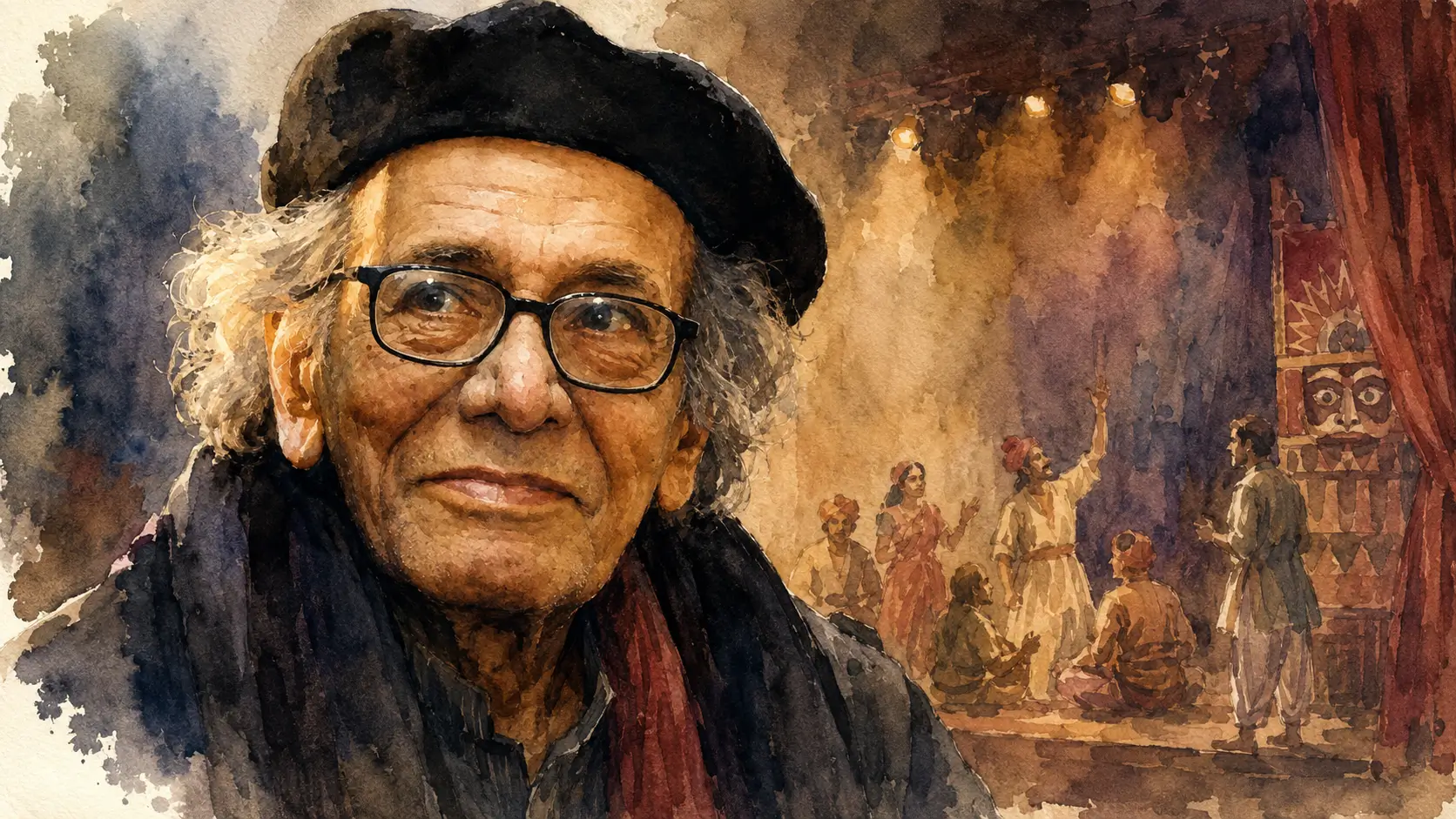
Habib Tanvir (1 September 1923 – 8 June 2009) was one of modern India’s most influential theatre directors, playwrights, and poets, known for fusing Chhattisgarhi folk performance traditions with modern Indian theatre. His essay-interview “It Must Flow: A Life in Theatre” — originally published in Seagull Theatre Quarterly (based on conversations with Anjum Katyal and Biren Das Sharma) — traces his personal journey from a Persian-poetry-reciting child in Raipur to the founder of Naya Theatre, and lays out his core belief that theatre, like life, must keep flowing rather than staying fixed to rigid forms.
Quick Facts Table
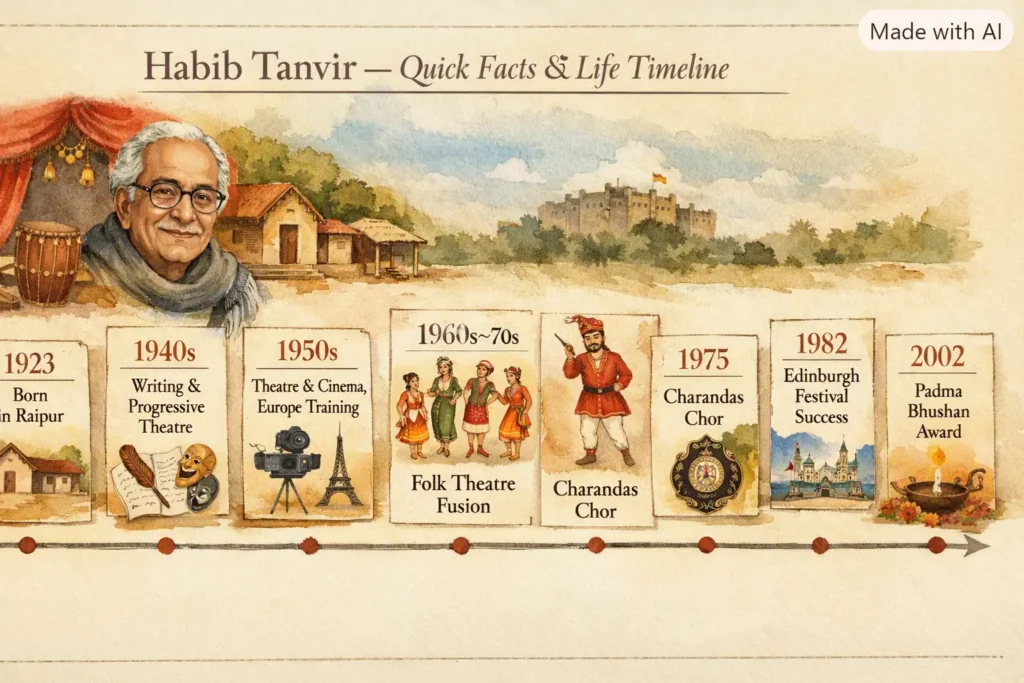
| Fact | Detail |
|---|---|
| Full Name | Habib Tanvir (pen name: Takhullas, early in career) |
| Born | 1 September 1923, Raipur, Chhattisgarh |
| Died | 8 June 2009 |
| Founded | Naya Theatre (1959, Bhopal) |
| Famous Plays | Agra Bazaar (1954), Charandas Chor (1975) |
| Major Awards | Padma Shri (1983), Padma Bhushan (2002), Sangeet Natak Akademi Fellowship (2002) |
| Known For | Fusing Chhattisgarhi folk theatre (Nacha) with modern drama; using non-professional folk actors |
| Text Studied | “It Must Flow: A Life in Theatre” (interview-essay), Seagull Theatre Quarterly, Issue 10 |
Biography of Habib Tanvir
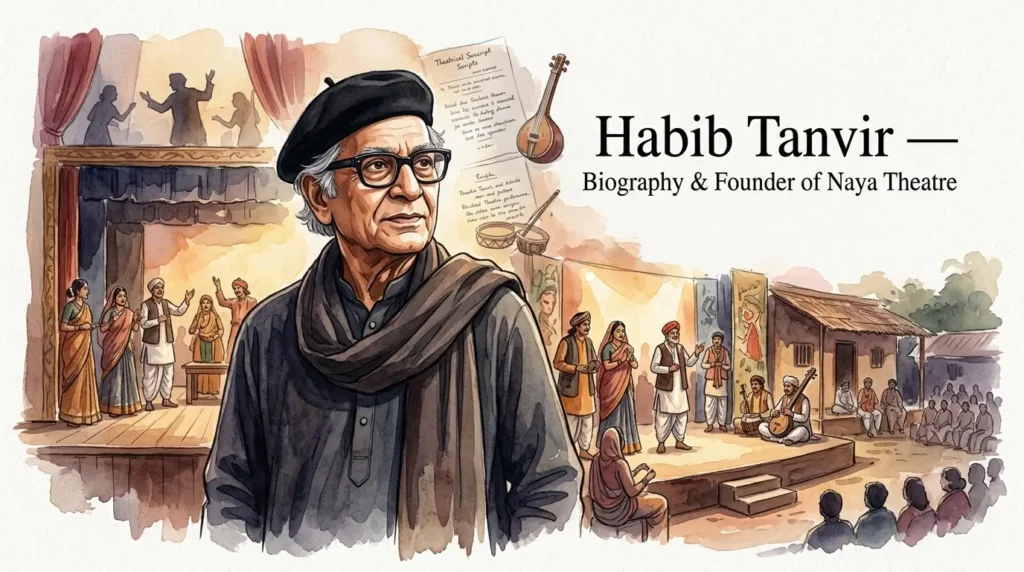
Habib Tanvir was born on 1 September 1923 in Raipur, Chhattisgarh, into a household where his father was religious but his maternal uncles were drawn to music and poetry — an early influence that shaped his artistic sensibility. He studied at Aligarh Muslim University and later moved to Bombay, where he joined the Progressive Writers’ Association and the Indian People’s Theatre Association (IPTA).
In 1959, he founded Naya Theatre in Bhopal, giving a platform to untrained Chhattisgarhi folk performers and becoming a pioneer of the folk–modern theatre fusion in India. He is best remembered for plays like Charandas Chor (1975) and Agra Bazaar (1954), both of which combined humour with sharp social commentary. Tanvir received the Padma Bhushan and the Sangeet Natak Akademi Fellowship, among many other honours, before his death in 2009. His life’s work remains a landmark case study in how regional folk art can be brought into dialogue with modern literary theatre — a theme central to the DSC-1 Introduction to Literary Studies syllabus.
Habib Tanvir’s Major Contributions to Theatre
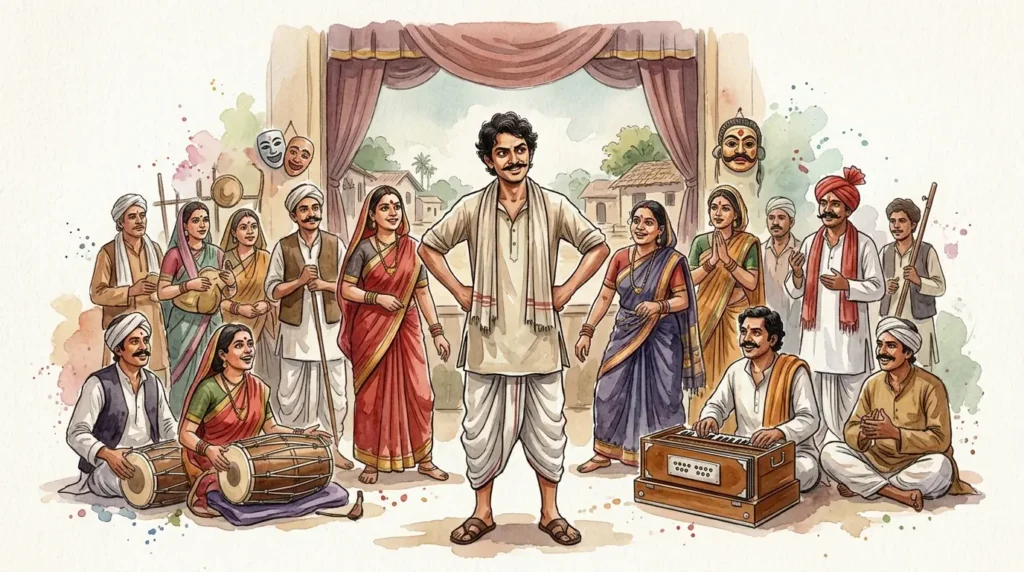
- Mixing Folk and Modern Theatre — Tanvir integrated Chhattisgarhi folk actors, dialects, and forms like Nacha into modern dramatic structures.
- Founding Naya Theatre (1959) — Gave rural and tribal performers a stage, challenging the urban elitism of Indian theatre.
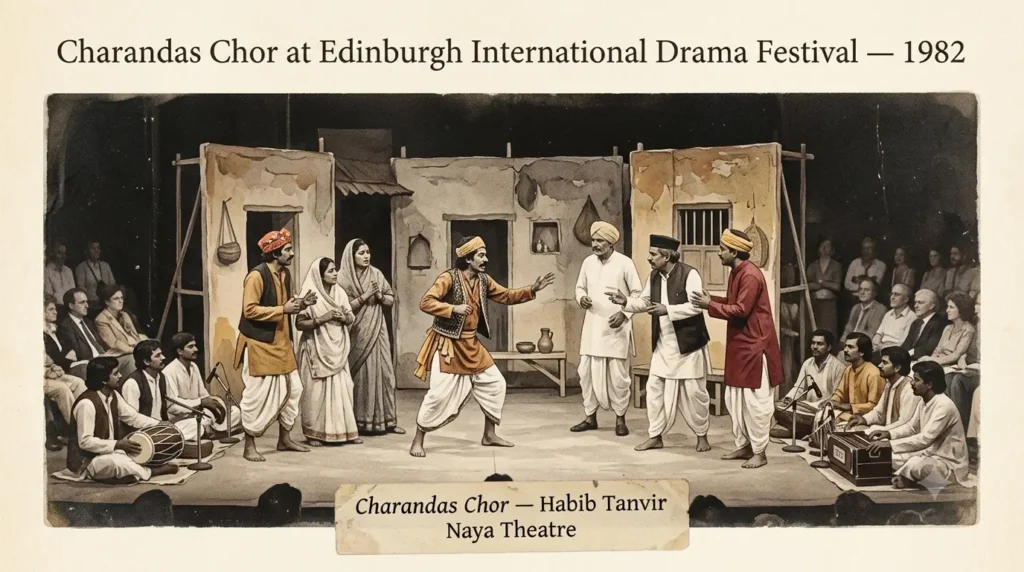
- Landmark Plays — Charandas Chor (1975), praised internationally including at the Edinburgh Festival; Agra Bazaar (1954), built around the life and poetry of Nazir Akbarabadi.
- Social and Political Commentary — Influenced by leftist ideas and IPTA, his plays consistently addressed poverty, injustice, and inequality.
- Support for Non-Professional Actors — Trained Chhattisgarhi tribal performers rather than relying on formally trained urban actors.
- Use of Local Languages — Prioritised Chhattisgarhi and regional dialects over Hindi/English-only theatre.
- Reviving Folk Theatre — Kept traditions like Nacha alive by reworking them for contemporary audiences.
- Global Recognition — His work was performed and celebrated at international festivals.
- Theatre as Education — Believed drama should teach as much as it entertains, tackling caste and corruption through humour.
Overview of the Article “It Must Flow”
Key Themes of “It Must Flow”
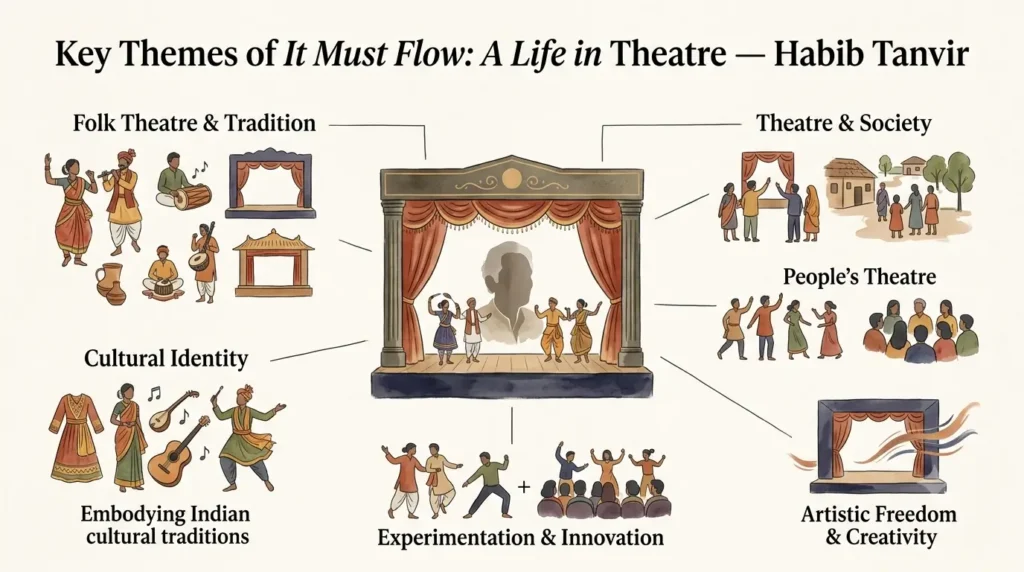
- Theatre as a Living Art — Tanvir insists theatre must “flow” like a river, constantly evolving rather than freezing into fixed conventions.
- Cultural Roots and Authenticity — Theatre should stay grounded in local culture and language rather than imitating Western models.
- The Role of the Artist — Artists must engage with real social struggles, not merely entertain.
- Folk and Modern Theatre Fusion — Modern theatre, he argues, has much to learn from the directness of folk forms.
- Flexibility in Form and Content — He rejects rigid dramatic rules in favour of improvisation and audience interaction.
- Theatre as a Reflection of Society — Drama should mirror real issues of class, poverty, and everyday life.
- Engagement with the Audience — Tanvir valued an interactive, emotionally involved audience over passive spectatorship.
- The Power of Storytelling — Folklore-based narratives, for Tanvir, both entertain and instruct.
- Resistance to Commercialization — He criticised the reduction of theatre to a profit-driven product.
Explanation with Reference to Context
Students are often asked to explain specific passages from “It Must Flow” with reference to context. Two frequently asked extracts:
- On his early influences: Tanvir recalls reciting a Persian ghazal of Hafiz as a child at a gathering hosted by a family friend — an anecdote used to show how music, poetry, and performance were present in his life from childhood, long before he entered formal theatre.
- On moving to Delhi and writing in Urdu: Tanvir describes rewriting Shatranj ke Mohre in “chaste Lucknowi Urdu” and then writing Agra Bazaar (1954) — a passage often quoted to illustrate his deliberate choice of language as an artistic and political act, connecting him to Delhi’s literary heritage through writers like Ahmed Shah Bokhari.
Personal Anecdotes of Habib Tanvir
- Chhattisgarhi Folk Artists and Naya Theatre — Tanvir initially struggled to communicate with untrained folk performers but came to see their natural talent as the embodiment of his idea of “flowing” theatre.
- Experiences with Improvisation — An unexpected on-stage incident was absorbed into a performance by folk actors, reinforcing Tanvir’s belief in flexibility over rigid scripting.
- Censorship and Resistance — One of his politically sensitive plays faced censorship; he continued performing it, using subtlety to keep its message alive.
- Performing “Charandas Chor” Internationally — At the Edinburgh Festival, Tanvir observed how the simplicity of folk theatre and universal themes of morality crossed language barriers.
- Lessons from Folk Performers — He credited untrained performers with a natural sense of timing and storytelling that formally trained actors sometimes lacked.
Tanvir’s Theatrical Philosophy
Integration of Folk Traditions
Tanvir’s theatrical philosophy rested on reviving folk forms like Nacha, valuing authenticity over polish, using folk narratives for moral commentary, keeping staging minimalist, and consistently blurring the urban–rural cultural divide. He described his goal as building a genuine “theatre of the people.”
Habib Tanvir’s Impact on Indian Theatre
Tanvir reshaped Indian theatre by combining folk and modern forms, casting non-professional rural actors, writing in regional dialects, encouraging audience interaction and improvisation, keeping stagecraft minimal, touring rural areas with Naya Theatre, using theatre as a tool for social change, weaving live music into performance, foregrounding marginalised voices, and carrying Indian folk theatre to international festivals such as Edinburgh. His adaptations of folk tales — most famously Charandas Chor — updated traditional stories for contemporary social commentary while preserving their original charm.
Impact and Legacy
Habib Tanvir’s influence is visible in how contemporary Indian theatre approaches regional language performance, rural outreach, non-professional casting, improvisation, and socially engaged storytelling. His work continues to inspire playwrights and directors who look to folk traditions as a living resource rather than a museum piece, and his international collaborations helped open doors for Indian theatre on the global stage.
Recognition and Awards
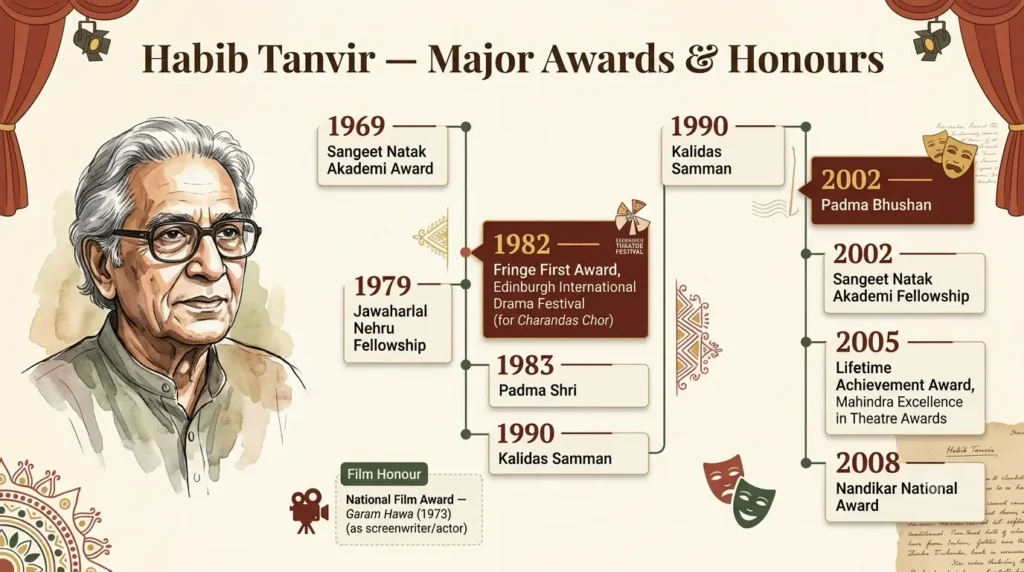
| Year | Award |
|---|---|
| 1969 | Sangeet Natak Akademi Award |
| 1979 | Jawaharlal Nehru Fellowship |
| 1982 | Fringe First Award, Edinburgh International Drama Festival (for Charandas Chor) |
| 1983 | Padma Shri |
| 1990 | Kalidas Samman |
| 2002 | Padma Bhushan |
| 2002 | Sangeet Natak Akademi Fellowship |
| 2005 | Life Time Achievement Award, Mahindra Excellence in Theatre Awards |
| 2008 | Nandikar National Award |
| — | National Film Award (for Garam Hawa, 1973, as screenwriter/actor) |
Conclusion
Habib Tanvir transformed Indian theatre by treating tradition not as something to preserve behind glass, but as a living, flowing resource for modern storytelling. “It Must Flow: A Life in Theatre” captures both his personal journey and his conviction that art must stay rooted in culture while constantly adapting — a philosophy that still shapes Indian theatre today.
DU Previous Year Questions
(Compiled from recurring patterns in DSC-1 Introduction to Literary Studies question papers)
- Explain the significance of the title “It Must Flow: A Life in Theatre.”
- Discuss Habib Tanvir’s contribution to the fusion of folk and modern Indian theatre.
- Write a short note on Naya Theatre and its role in Tanvir’s career.
- “Theatre should flow like life” — Explain this statement with reference to Tanvir’s essay.
- Explain with reference to context: the passage describing Tanvir’s early influence of Persian poetry.
- How does Tanvir use folk traditions to comment on social and political issues? Discuss.
- Comment on the role of improvisation in Tanvir’s theatrical philosophy.
- Discuss the importance of regional language and dialect in Habib Tanvir’s plays.
Continue Reading — Unit 3, DSC-1 (Reading Drama)
FAQs
-
What is “It Must Flow: A Life in Theatre” about?
It is an autobiographical essay/interview by Habib Tanvir in which he traces his life in theatre and explains his belief that drama must remain flexible, evolving, and rooted in folk culture rather than fixed dramatic conventions.
-
Who founded Naya Theatre and when?
Habib Tanvir founded Naya Theatre in 1959 in Bhopal, giving Chhattisgarhi folk performers a platform on the modern stage.
-
Which play is Habib Tanvir most famous for?
Charandas Chor (1975) is his most internationally recognised play, winning the Fringe First Award at the Edinburgh International Drama Festival in 1982.
-
What are the major themes of “It Must Flow”?
Key themes include theatre as a living, evolving art; cultural authenticity; the artist’s social responsibility; folk–modern fusion; flexibility in form; and resistance to the commercialisation of theatre.
-
Which DU course includes “It Must Flow: A Life in Theatre”?
It is part of Unit 3 (Reading Drama) in DSC-1: Introduction to Literary Studies, Semester 1, BA (Hons) English, University of Delhi.
Subscribe to keep reading
You've used your free notes for now. Get Delhi Pathshala Premium for unlimited access.
Subscribe — ₹29/30 days